
Why Does My Coffee Taste Bitter? 5 Causes and How to Fix Each One
You did nothing wrong this morning. Same beans, same brewer, same routine. Still, you keep asking: why does my coffee taste bitter, harsh, and dry? Bitter is rarely the bean. It is a brew problem, and brew problems have fixes. Give me a few minutes. By the end you will know the five causes, the order to check them in, and the one change to make on your next cup.
Roasted only after you order. Both of our coffees are 24 per full pound, and most roasters sell 12 oz bags. Your first order is covered by our love it or your money back guarantee.
The short answer: Your coffee tastes bitter because the water pulled too much out of the grounds. That is over-extraction, and five things cause it: a grind that is too fine, water that is too hot, a brew that ran too long, a roast that is too dark, and old oils in dirty gear. Start by grinding one step coarser, and change one thing at a time.
Why does my coffee taste bitter? Start with extraction
Brewing is extraction. Hot water pulls flavor out of the grounds, and not all at once. The bright acids come out first. Sweetness and body come next. The harsh, bitter notes come last.
A balanced cup stops in the sweet middle. The Specialty Coffee Association puts that window at about 18 to 22 percent of the coffee pulled into the water. Go past it and the harsh notes take over. That is over-extraction, the root of almost every bitter cup.
Five things push you past that window. Work them in order. Change one thing, taste, then decide. If you change three things at once and the cup improves, you learned nothing, and tomorrow is a guess again.
Cause 1: Your grind is too fine
This is the first place I look. Fine grounds give water more surface to work on, so extraction runs fast. Too fine for your brewer, and the water pulls past sweet into bitter before the brew is done.
The fix is small. Go one step coarser and brew again. Do not jump three steps. Our coffee grind size chart matches each brewer to its grind, from fine for espresso to medium for drip to coarse for French press.
One more trap: an uneven grind. A blade grinder makes dust and chunks in the same scoop. The dust over-extracts and turns bitter. The chunks under-extract and taste sour. Bitter and sour at once points right at that mix.
Cause 2: Your water is too hot
Hotter water extracts faster and harder. A kettle poured right off a rolling boil sits at 212 degrees, and that is too hot for coffee. It drags the harsh notes out early and leaves the cup scorched and sharp.
Aim for 195 to 205 degrees. No thermometer? Boil the water, take it off the heat, and wait about 30 seconds before you pour. That one pause is the cheapest fix on this page.
Roast matters here too. Dark roasts give up flavor fast, so use the low end of that range for them.
Cause 3: Your brew ran too long
Time is extraction too. Leave grounds sitting in hot water and the water keeps pulling, long after the sweet part is done. A French press you forgot for ten minutes is the classic case. It comes back heavy, dry, and harsh.
Use these times as your guide. French press: press and pour at about 4 minutes, and pour it all out so it stops brewing. Pour-over: about 2 and a half to 4 minutes total. Espresso: about 25 to 30 seconds.
And do not let a finished pot sit on a hot plate. It keeps cooking and turns harsh. Pour it into an insulated carafe instead.
Cause 4: The roast is darker than your taste
Sometimes your method is clean and the bitterness is baked in at the roast. Roasting builds the bitter notes in coffee. The darker and longer the roast, the more of the harsh, lingering compounds you get.
This part surprises people: caffeine is not the main culprit. In research shared with the American Chemical Society, chemists found roasting is the key driver of bitterness, and caffeine plays only a small part.
The fix is not better technique. It is a different bag. Try a medium roast and taste the same brew again. Our light roast vs dark roast guide shows how much the roast alone changes the cup.
Cause 5: Your gear is dirty
Coffee leaves oil behind. It coats your grinder, your basket, and your carafe. Over time that oil turns rancid, and rancid oil tastes bitter and burnt. It gets into every cup, even a perfect brew with fresh beans.
This cause hides well because it grows slow. The cup gets a little worse each week, so you blame the beans. Ask one question: when did you last wash the brewer and the grinder, not just rinse them?
Rinse right after you brew. Wash with soap on a regular schedule. If your cup turned bitter for no clear reason, clean first, then judge.
The bitter fix checklist: work it in this order
Work this order, from biggest effect to smallest, and stop as soon as the cup turns.
- Grind one step coarser. Brew and taste. This one move fixes more bitter cups than any other.
- Cool the water a touch. Stay in the 195 to 205 range. Let boiled water sit for about 30 seconds.
- Time the brew. French press at 4 minutes, pour-over under 4, and pour the pot off the hot plate when it is done.
- Weigh your ratio. Start at 1 to 16 by weight, like 30 grams of coffee to 480 grams of water. A scale makes the good cup repeatable. Scoops change with every bean and grind.
- Try a medium roast. If the first four steps fail, the roast is the problem, not you.
- Clean the gear and filter the water. Wash out old oils, and use filtered water if your tap tastes of chlorine. Coffee is mostly water, so water you can taste will show up in the cup.
Still sour instead of bitter? That is the opposite problem, and it has its own fixes. Read why your coffee tastes sour and work that list instead. Do not mix the two lists. They pull in opposite ways.
Which Besa bag to try if bitter is your problem
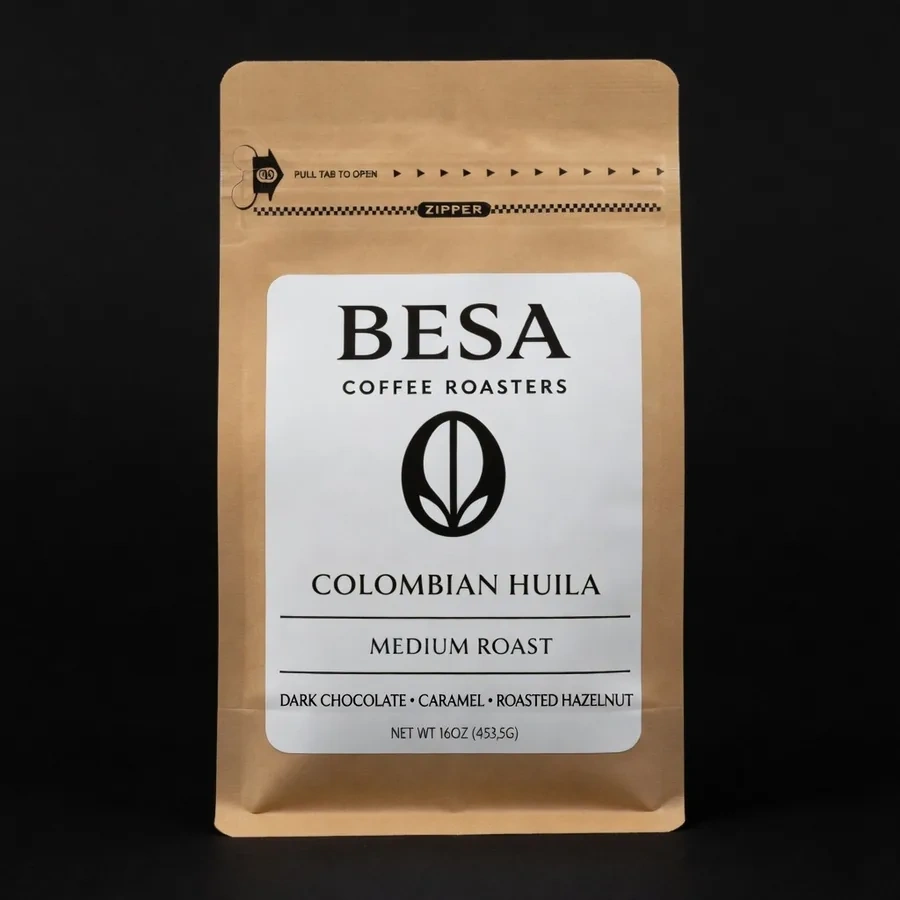
Start with our Colombian Huila. It is a medium roast, single origin, with dark chocolate, caramel, and hazelnut notes. Medium is the key word. It is roasted enough for rich sweetness, but not so dark that harsh notes run the cup. Brew it with the checklist above and it stays smooth.
Want bright instead of rich? Our Ethiopian Yirgacheffe is a light-medium roast with citrus, honey, and floral notes, and it brews clean with no harsh edge.
Both bags are roasted only after you order, here in Houston, Texas. Fresh beans will not fix a bad grind, but stale beans can make a good method taste harsh. Start fresh, then dial in.
Bitter coffee questions, answered
Why does my coffee taste bitter?
Most bitter coffee is over-extracted. The water pulled too much out of the grounds. The usual causes are a grind that is too fine, water that is too hot, a brew that ran too long, a roast that is too dark for your taste, or old oils built up in your brewer. Start with the grind. Go one step coarser and taste again.
How do I fix bitter coffee?
Change one thing at a time. First go one step coarser on the grind. Next check your water: aim for 195 to 205 degrees, or let boiled water sit for about 30 seconds. Then time your brew, weigh your coffee at a 1 to 16 ratio, and clean your brewer. If you change two things at once, you will not know which one worked.
What water temperature is best for coffee?
Between 195 and 205 degrees. Boiling water at 212 degrees pulls harsh compounds out too fast. If you do not have a thermometer, boil the water, take it off the heat, and wait about 30 seconds before you pour.
Does dark roast taste more bitter than medium roast?
In general, yes. Longer roasting forms bitter compounds that taste harsher and linger longer, and research presented to the American Chemical Society found roasting, not caffeine, is the key driver of bitterness. A medium roast of the same coffee will usually taste smoother and sweeter.
Why does my coffee taste bitter and sour at the same time?
That mix often points to an uneven grind. Fine dust over-extracts and turns bitter, while big chunks under-extract and taste sour, all in the same cup. A blade grinder makes that mix. A burr grinder, or a fresh grind matched to your brewer, fixes it.
Can dirty equipment make coffee taste bitter?
Yes. Coffee oils coat your brewer and grinder and turn rancid over time. That old oil adds a bitter, burnt taste to every cup, even with fresh beans. Wash your brewer and grinder on a regular schedule, and rinse right after you brew.
Taste the smooth side of the same brew.
You now know the five causes and the order to fix them. The last piece is a bean that starts smooth. Our Colombian Huila is a medium roast built for a rich, sweet cup, and our Ethiopian Yirgacheffe gives you a bright one. Both are single origin, and both are roasted only after you order in Houston, Texas.