
Best Coffee for French Press: How to Pick Beans That Brew Rich and Clean
Your press gives you a rich cup one morning and a muddy one the next, and you blame your pour. Most of the time, the bag is the problem. The best coffee for French press is a fresh bag, at the right roast, ground coarse. Give me a few minutes. By the end, you will have a five-point checklist, a simple starting brew, and a clear pick for your first bag.
Roasted only after you order. Both of our coffees are 24 per full pound, and most roasters sell 12 oz bags. Your first order is covered by our love it or your money back guarantee.
The short answer: The best coffee for French press is a fresh whole bean at a medium to medium-dark roast, ground coarse right before you brew. The press steeps grounds in hot water with no paper filter, so the oils stay in the cup and rich, sweet beans brew full and heavy. Grind about like coarse sea salt, start at 1 part coffee to 15 parts water, and steep 4 minutes. Stale beans or a fine grind turn the same press muddy.
Why a press treats a bag differently
A French press is an immersion brew. Your grounds sit in hot water for the whole brew, about 4 minutes. Then a metal mesh plunger pushes them down. There is no paper filter in the way.
That one fact changes what a good bag means. Paper catches oils and fine bits. Mesh lets them through. So the oils stay in your cup, and the cup tastes heavier and fuller than drip or pour over.
The hard news is the same fact. Fine bits stay in your cup too. A stale bag has nowhere to hide, and a fine grind turns to mud. Get the bag and the grind right, and the method is easy.
The 5-point checklist for the best coffee for French press
Run any bag through these five checks before you buy it. Pass all five, and your press has a fair shot at a rich, clean cup.
- Fresh, and dated by roast day. Look for a roast date, not just a best-by date set months out. A best-by date tells you almost nothing about taste. A press shows staleness fast, because nothing gets filtered out to soften a flat cup. If the bag will not tell you when it was roasted, that is your answer.
- Medium to medium-dark roast. This is the sweet spot for most press drinkers. A medium roast gives you cocoa and brown sugar notes with good weight. A bit darker brings more chocolate and caramel. Light roasts can work, but they lean bright and tea-like, and they can taste thin in a press if anything else is off.
- Notes that love a long steep. Look for chocolate, caramel, brown sugar, hazelnut, or almond on the bag. Those notes stay sweet when the grounds sit in hot water for minutes at a time.
- Whole bean, ground coarse, right before you brew. Whole beans hold their flavor far longer than ground coffee. Grind coarse, about like coarse sea salt or breadcrumbs. Fine grounds slip through the mesh and land in your cup as grit, and they pull too much flavor out and turn bitter. A burr grinder helps here, because it makes even grounds with fewer powdery bits than a blade grinder.
- Matched to how you drink it. Drink your press black and want it rich? Stay with the fuller, sweeter bean. Add milk? You still want those chocolate and caramel notes, because they hold up in a full, heavy cup. Want a softer, brighter press? A lighter bean can do that job. Just know the trade before you buy.
Any bean can go in a press. Not every bean should.
Here is the open loop from the top, closed. There is no French press bean plant. A press will brew any coffee you put in it. The question is what the steep and the mesh do to that coffee once it is in there.
That is also where the blend question lands. Blends mix beans from more than one place to hit one steady taste. They are easy to repeat, press after press. Single origin beans come from one place, so you taste that place clearly. In a press, that taste feels rounder, because the body fills in around it. Our guide to single origin vs blend coffee walks through that choice in full.
One more trap: pre-ground bags sold for drip. That grind is too fine for a press. It clogs the plunge, clouds the cup, and makes good beans taste harsh. If you buy ground, it has to be coarse ground. Whole bean, ground at home, is the safer path.
Your starting press, and the two fixes
Once you have a good bag, use the same start we teach in our guide on how to make French press coffee. Then change only one thing at a time.
The start: use a 1 to 15 ratio by weight. That is 30 grams of coffee to 450 grams of water for two big mugs. Grind coarse. Steep 4 minutes. Plunge slow. Then pour the whole press out at once, into mugs or a carafe. Coffee left sitting on the grounds keeps brewing and turns bitter while it waits. Our coffee grind size chart shows where press grind sits next to every other brewer.
Muddy or gritty: your grind is too fine, or your grinder is making dust with the coarse bits. Go coarser first. That one change fixes most bad press cups.
Weak or thin: your ratio is light, your steep was short, or your grind is too coarse. Check the ratio first, steep the full 4 minutes, then adjust. And if the bag has been open for months, stop tuning. Run our five-second coffee freshness test on it first.
Which Besa bag should your press try first?
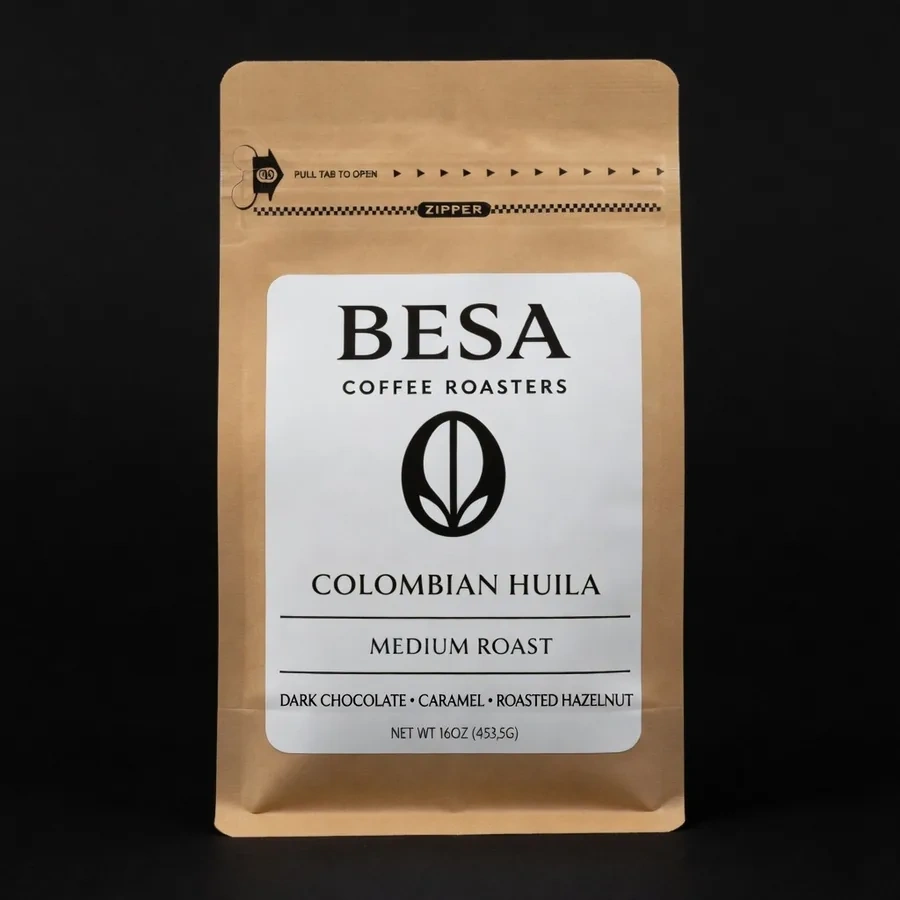
For most press drinkers, I would start with our Colombian Huila. It is a medium roast with dark chocolate, caramel, and hazelnut notes, rich and sweet with a smooth, full body. French press is one of the brew methods we list for it on its page. The press keeps the oils, and this bean has the notes to fill that body in.
For a softer press, try our Ethiopian Yirgacheffe. It is a light-medium roast with bright citrus, sweet honey, and soft floral notes. In a press it tastes rounder and softer than in a pour over, and the bright notes still show.
Either way, we roast only after you order. Your bag starts fresh, and a press can tell the difference from the first cup.
French press bean questions, answered
What is the best coffee for French press?
Fresh, whole bean coffee at a medium to medium-dark roast, ground coarse right before you brew. A French press steeps grounds in hot water and uses a metal mesh filter, so the oils stay in your cup. Rich, sweet beans give you a full cup. Stale or fine-ground beans give you a muddy one.
What roast level is best for French press?
Medium to medium-dark is the sweet spot for most people. Those roasts bring chocolate, caramel, and nut notes, and the press keeps the oils that carry that body. Light roasts can work too. They taste brighter and more tea-like, and they can taste thin if the rest of the brew is off.
What grind size is best for French press?
Coarse, about like coarse sea salt or breadcrumbs. Fine grounds slip through the metal mesh and land in your cup as grit. They also pull too much flavor out during the steep and turn the cup bitter. A burr grinder helps because it makes even grounds with fewer fine bits.
What is the best ratio and steep time for French press?
Start at 1 to 15 by weight, like 30 grams of coffee to 450 grams of water, and steep for 4 minutes. Then plunge slow and pour the whole press out at once. Coffee left sitting on the grounds keeps brewing and turns bitter while it waits.
Why does my French press coffee taste muddy?
Mud almost always means the grind was too fine. Small bits pass through the mesh filter and stay in the cup. Go coarse, grind right before you brew, and plunge slow and steady. If the cup is still gritty, check that your grinder is not making a lot of dust along with the coarse bits.
Is single origin or blend coffee better for French press?
Both can work well. A blend is built for one steady taste and is easy to repeat. A single origin bean lets you taste one place clearly, and the full body of a press can make those notes feel rounder. Pick by taste: chocolate and caramel notes for a rich cup, brighter notes for a softer one.
Your press was not the problem.
Now you have the checklist: a fresh, dated bag, a medium roast, notes that love a steep, a coarse grind, and a bean matched to your cup. Both of our coffees are single origin, sold by the full pound, and roasted only after you order.