
Light Roast vs Dark Roast Coffee: Which One Should You Buy?
You are looking at two bags of coffee. One says light roast. The other says dark roast. You have no idea which one you will actually enjoy, so you grab the one with the nicer bag. We have all done it. But the light roast vs dark roast choice is one of the biggest flavor decisions in all of coffee, and the labels tell you almost nothing. There is no industry standard. Give me four minutes. You will learn what light roast vs dark roast coffee really means, how caffeine and flavor change between them, and the 5 point checklist I use to match a roast to the way I drink coffee.
Roasted only after you order. Both of our coffees are 24 per full pound, and most roasters sell 12 oz bags. Your first order is covered by our love it or your money back guarantee.
The short answer: Buy light roast if you drink coffee black and love bright, fruity, origin flavor, and buy dark roast if you want a smooth, bold, low-acid cup. Caffeine is nearly the same in both, so pick on taste and how you brew, not strength. New to the choice? Start with medium, which works in every brewer.
What light roast vs dark roast really means on a bag
Forget the words on the bag for a minute. A roast level describes how far the roaster pushed the beans through heat. The most useful waypoints are sounds.
Green coffee beans hit two audible milestones in the roaster. First crack happens around 385 to 405 degrees, and it really does sound like popcorn. Second crack follows around 440 to 455 degrees, quieter this time. Roasters use those two cracks as their stop signs.
Light roasts drop at or just past first crack. Medium roasts develop in the gap between the cracks. Dark roasts push through second crack and beyond. That is the whole spectrum.
Here is what matters for you as a buyer. The word on the bag is only as trustworthy as the roaster who put it there. Read three other things on the label too. The roast date, the tasting notes, and the origin. Those tell you more than the roast word ever will. Want the full test for freshness? Read our 5 second freshness test.
The four roast levels, in plain language
Light roast: bright and full of origin flavor
Light roast beans are dropped just past first crack, around 356 to 401 degrees. They look tan and dry, with no oil on the surface. In the cup you get bright acidity and the most origin flavor of any roast level. Fruity, floral, tea like. This is the roast where a washed Ethiopian tastes like the farm it came from.
Old names for light roast include Cinnamon and New England. Light roast shines in a pour over, where the clean brewing shows off all that brightness. The trade off is that it is the least forgiving roast to brew.
Medium roast: the balanced everyday cup
Medium roast lands between the cracks, around 410 to 428 degrees. The beans are brown and still dry. The flavor is balanced. Caramel and chocolate start to appear, the acidity softens, and the body fills out. This is the most popular roast in America, and it is easy to see why.
Old names include City and American. Medium works in almost every brewer. If you only want one bag in the house, this is the one. Our Colombian Huila is roasted medium for exactly that reason.
Medium dark roast: bold without going bitter
Medium dark sits at or just past second crack, around 437 to 446 degrees. The beans are deep brown with a slight sheen of oil. Chocolate and spice notes take over, acidity drops low, and the body gets heavy.
Old names include Full City and Viennese. This is the sweet spot for French press and espresso. The body holds up under pressure, and the chocolate notes love milk.
Dark roast: bold, smoky, roast driven
Dark roast pushes past second crack, around 464 to 482 degrees. The beans are very dark and shiny with oil. At this point the origin flavor is mostly gone. What you taste is the roast itself. Smoke, dark chocolate, bittersweet edges.
Old names include French, Italian, and Espresso. And here is a fact most people get wrong. Espresso is a brewing method, not a roast. But dark roasts got the name because they pair so well with milk drinks and moka pots. A good dark roast names its origin and describes a real flavor. A bad one only says bold and strong.
Does dark roast have more caffeine?
No. This is the most stubborn myth in coffee. Dark roast tastes stronger, so people assume it has more caffeine. But bold flavor is not a caffeine meter. Researchers who measured caffeine across roast levels found that roasting burns off almost none of it. The small change that does happen comes from moisture loss alone, and it is too tiny to feel in the cup.
There is one real but tiny difference. Light roast beans are denser. So if you measure with a scoop, a scoop of light roast can hold a little more coffee and a little more caffeine. If you measure with a scale, the difference is basically zero.
Here is the honest rule. Caffeine comes from your dose and your brew, not from the color of the bean. If you want more caffeine, use more grounds. Do not buy a darker roast and expect to feel it.
What about acidity and your stomach?
Roasting breaks down the natural acids in the bean. In one study, a cup of light roast held about nine times more of these acids than a cup of dark roast. That is why light roast tastes bright and lively, and dark roast tastes smooth and mellow.
If coffee ever bothers your stomach, or you just prefer a gentler cup, darker is the right call. If you love that bright, zippy, fruit forward character, go lighter. Neither is better. They are just built for different people.
The 5 point checklist for picking your roast
You now know more than most people standing in the coffee aisle. Turn it into a decision with these five questions.
- Do you drink it black or with milk? Black coffee shows everything, so go light or medium. Milk softens flavor, so a medium or dark roast with real body cuts through instead of disappearing.
- How do you feel about bright acidity? If you love bright, fruity, tea like cups, buy light. If you want smooth, mellow, and easy, buy dark. This is a taste question, not a quality question.
- What brewer do you use? Match the roast to the method. Pour over loves light to medium. Drip loves medium. French press loves medium dark to dark. Espresso works best with medium to medium dark. Medium is the safe pick that works in all of them.
- Do you chase origin flavor or roast flavor? Want to taste where the coffee grew? Go light or medium, and buy whole bean so nothing goes stale before you taste it. Want bold, roasty comfort? Go dark. Our whole bean vs ground guide explains why this matters so much.
- New to all of this? Start with medium. It is forgiving, familiar, and works in every brewer you own.
Light roast vs dark roast coffee questions, answered
Does dark roast have more caffeine than light roast?
No. Roasting burns off almost no caffeine, and the difference is too small to feel. If you want more caffeine, use more coffee grounds.
Is light roast more acidic than dark roast?
Yes. Longer roasting breaks down the acids in the bean, so dark roasts taste smoother and milder while light roasts taste brighter and livelier. If coffee ever bothers your stomach, a dark roast is the gentler choice.
Which roast is best for pour over coffee?
Light to medium. Pour over is a clean, clear brewing method, so it shows off the fruity, floral origin flavors that lighter roasts preserve. Dark roasts can taste flat or bitter in a pour over.
Which roast is best for French press?
Medium dark to dark. The full immersion brewing of a French press builds a heavy body, and a darker roast adds the bold chocolate and caramel notes that pair well with it. Light roasts can taste thin in a press.
What do roast names like French roast and City roast mean?
They are old names for how dark the roast is. Cinnamon is very light. City is medium. Full City is medium dark. French and Italian are dark. The names are not standardized, so two roasters can use the same word for different roasts.
Should I buy light or dark roast if I drink coffee with milk?
Medium or dark. Milk softens flavor, so a bolder roast with more body cuts through instead of disappearing. Light roasts tend to get lost in lattes and cream.
Taste the difference yourself.
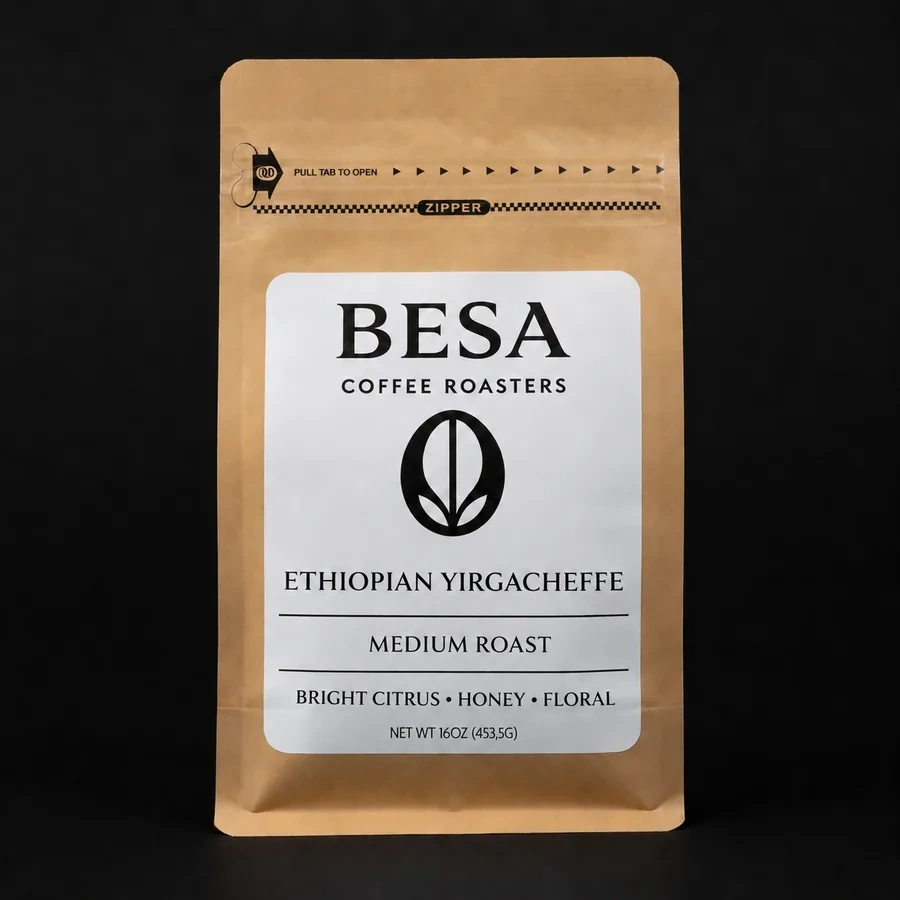
Our Ethiopian Yirgacheffe is a light medium roast: bright, tea like, and full of origin flavor. Our Colombian Huila is a medium roast: balanced, caramel sweet, and built for every brewer. Both are single origin, and both are roasted only after you order in Houston, Texas.