
Coffee Grind Size Chart: The Right Grind for Every Brewer
Your beans are good. Your water is hot. Your cup still tastes sour one day and bitter the next. Nine times out of ten, the problem is not the bean. It is the grind. This coffee grind size chart gives you the right grind for every brewer you own, in plain texture words you can check with your fingers. Give me five minutes. By the end you will know your setting, and you will know the one taste rule that fixes a bad cup when the chart is not enough.
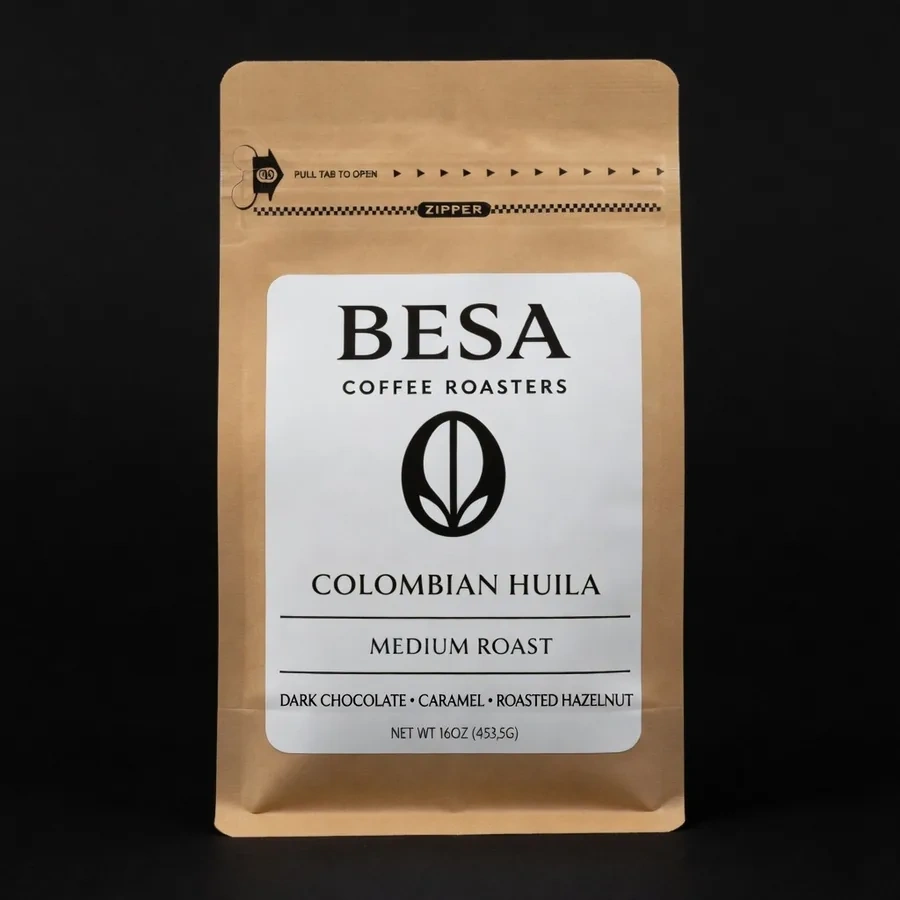
Roasted only after you order. Both of our coffees are 24 per full pound, and most roasters sell 12 oz bags. Your first order is covered by our love it or your money back guarantee.
The short answer: Match the grind to how long water stays with the coffee: the longer the contact, the coarser the grind. Cold brew wants extra coarse, French press wants coarse like sea salt, drip wants medium, pour over wants medium-fine, and espresso wants fine like powdered sugar. If your cup tastes sour and thin, grind finer. If it tastes bitter and harsh, grind coarser. One grind setting cannot fit every brewer.
The one rule behind the whole coffee grind size chart
Grind size is about surface. When you break a bean into small pieces, you expose more of it to water. More surface means the water pulls flavor out faster. Less surface means it pulls flavor out slower.
So the rule is simple. The longer water stays with the coffee, the coarser the grind should be. The shorter the contact, the finer it should be.
Espresso is the short end. Water rushes through in about 25 to 30 seconds under pressure, so the grind must be fine or the shot runs weak. French press sits in the middle, with about four minutes of steeping. Cold brew is the long end, with 12 to 24 hours in cold water, so it wants the coarsest grind of all.
Specialty brewers often aim to dissolve roughly 18 to 22 percent of the coffee into the cup. Below that range the cup tastes sour and thin. Above it the cup tastes bitter and dry. You do not need to measure this. Just know that grind is the lever that moves you into that sweet spot, or out of it.
The coffee grind size chart
Microns are thousandths of a millimeter. They sound technical, but they let you compare one guide to the next. The ranges below are starting points, not laws. Grinders are not all set the same way, so use the texture word first and the number second.
| Brewer | Grind | Feels like | Microns |
|---|---|---|---|
| Cold brew | Extra coarse | Cracked peppercorns | 1,000 to 1,600 |
| French press | Coarse | Sea salt | 900 to 1,200 |
| Chemex | Medium-coarse | Raw sugar | 800 to 1,000 |
| Drip machine | Medium | Table salt | 600 to 800 |
| Pour over (V60) | Medium-fine | Fine sand | 400 to 600 |
| AeroPress | Medium-fine | Fine sand | 400 to 600 |
| Moka pot | Fine-medium | Fine sugar | 300 to 500 |
| Espresso | Fine | Powdered sugar | 200 to 400 |
| Turkish | Extra fine | Flour | Under 200 |
Two rows deserve a note. A Chemex wants a step coarser than a V60 because its filter is thicker and already slows the water down. And Turkish coffee is the one method where the grounds are never filtered out, which is why it needs a flour-fine grind most home grinders cannot reach.
How to read your cup and fix it
The chart gets you close. Your tongue gets you the rest of the way. Learn these two signals and you can fix almost any cup.
Sour, sharp, or thin means grind finer. The water did not pull enough out of the coffee. A finer grind gives it more surface to work with. If this is your problem most mornings, our guide on why coffee tastes sour walks through the other causes too.
Bitter, harsh, or dry means grind coarser. The water pulled too much out. A coarser grind slows it down and stops the extraction sooner.
There is one odd case. If your cup tastes sour and bitter at the same time, do not keep turning the dial. That usually means your grounds are not one size at all. You have dust and chunks in the same batch, and they extract at two different rates. That is a grinder problem, not a setting problem.
Burr vs blade: why even size beats exact size
A burr grinder crushes beans between two surfaces set a fixed distance apart. The pieces come out close to the same size, so they extract at the same rate. A blade grinder chops with a spinning blade. It makes fine dust and big chunks at once.
That is why a steady medium from a burr grinder beats a so-called exact medium from a blade grinder. Uniform beats precise. If you are shopping for one upgrade for your home setup, this is it. It makes every other change you try actually mean something.
It also helps to grind right before you brew. Ground coffee gives up its aroma far faster than whole beans do, because all that new surface meets air at once. Our whole bean vs ground guide shows how big that gap is, and why we push whole bean so hard.
Roast level moves your setting a little
The chart assumes a middle-of-the-road bean. Your roast can shift the target by a step.
Light roasts are denser, so water needs more help to get flavor out. Try one step finer than the chart. Dark roasts are more brittle and give up flavor faster, so try one step coarser.
That matters for our two bags. Our Ethiopian Yirgacheffe is a light-medium roast, so start a touch finer than the row for your brewer. Our Colombian Huila is a medium roast, so start right on the chart. If you want the full roast story first, read our light roast vs dark roast guide.
The 5 point grind checklist
Run this list the next time a cup tastes off. It takes one brew to learn where you stand.
- Start on the chart. Find your brewer, use the texture word, and brew one cup with no other changes.
- Keep your dose and water the same. If you change the dose, the ratio, and the grind at once, you learn nothing about any of them.
- Taste for the signal. Sour and thin means finer. Bitter and harsh means coarser. Name it before you touch the dial.
- Move one small step only. One notch, then brew again. Big jumps skip right past the sweet spot.
- Reset for every new bag. A new origin or roast level can move the target. Run the same three or four small steps again and you will land it fast.
Coffee grind size chart questions, answered
What grind size should I use for French press?
Coarse, like sea salt, roughly 900 to 1,200 microns. A French press steeps for about four minutes and its metal mesh lets fine particles through, so a coarse grind keeps sediment out of your cup.
What grind size should I use for espresso?
Fine, roughly 200 to 400 microns, like table salt to powdered sugar. Espresso pulls in about 25 to 30 seconds under pressure, so the grind has to be fine enough to slow the water down.
What grind size should I use for pour over?
Medium-fine, like fine sand, roughly 400 to 600 microns for a cone brewer like a V60. A Chemex wants a step coarser, around medium-coarse, because its thicker filter already slows the water down.
Should I grind finer or coarser if my coffee tastes sour?
Finer. Sour and thin usually means the coffee is under-extracted. A finer grind gives the water more surface to work with. If your coffee tastes bitter and harsh, do the opposite and grind coarser.
Can I use one grind size for every brew method?
No. French press wants coarse particles around 900 to 1,200 microns and espresso wants fine particles under 400 microns. One setting cannot do both jobs well. Match the grind to how long the water stays with the coffee.
Is a burr grinder better than a blade grinder?
Yes. A burr grinder makes particles that are close to the same size, so they extract at the same rate. A blade grinder makes dust and chunks at the same time, so one cup can taste sour and bitter at once.
Good beans deserve the right grind.
Start with fresh beans, then let the chart do the rest. Our Ethiopian Yirgacheffe is a light-medium roast that loves a pour over. Our Colombian Huila is a medium roast built for French press, drip, and everything in between. Both are single origin, and both are roasted only after you order in Houston, Texas.