
Coffee to Water Ratio Chart: How Much Coffee for Every Brewer
Same beans. Same brewer. One morning your cup is rich, the next it is weak tea. The bean did not change. Your dose did. This coffee to water ratio chart fixes that. Give me two minutes. By the end, you will know the one ratio to start with, the right number for your brewer, and how much coffee a full pot really takes.
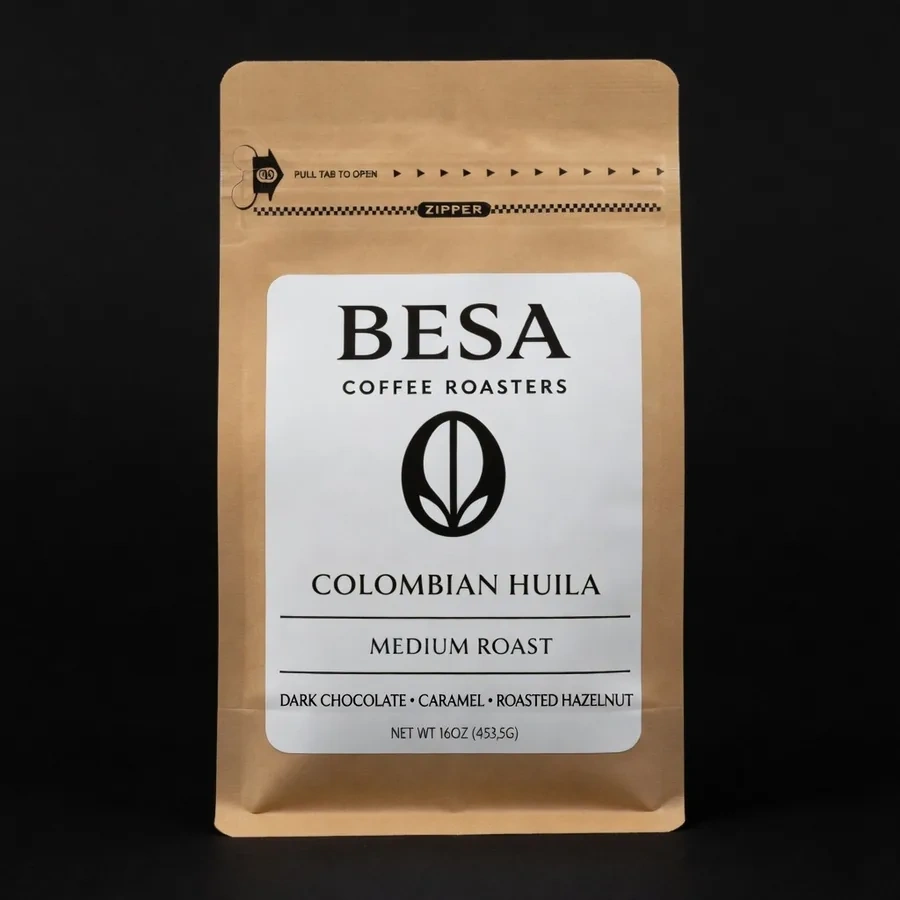
Roasted only after you order. Both of our coffees are 24 per full pound, and most roasters sell 12 oz bags. Your first order is covered by our love it or your money back guarantee.
The short answer: Start with 1:16: one gram of coffee for every 16 grams of water. That is the balanced middle most home brewers land in. Pour over and drip sit at 1:15 to 1:18, French press and AeroPress at 1:14 to 1:16, espresso at 1:2, and cold brew anywhere from 1:5 to 1:15. Weigh your coffee and water, then adjust one step at a time to taste.
What a ratio means, in plain terms
A ratio is just coffee weighed against water. 1:16 means one gram of coffee for every 16 grams of water. One ml of water weighs about one gram, so you can weigh both on the same small scale.
The order trips people up at first. Coffee comes first, water second. And a smaller second number means a stronger cup: 1:14 uses more coffee per sip than 1:18, so 1:14 tastes stronger.
Why weigh at all? Because a scoop is not a measure. A spoon of light roast weighs more than a spoon of dark roast, and a fine grind packs tighter than a coarse one. Your scoop drifts. Your scale does not.
The golden ratio: start at 1:16
There is an official starting line. The Specialty Coffee Association sets its Golden Cup standard at 55 grams of coffee per litre of water, give or take 10 percent. That works out to about 1:18, with a target extraction of 18 to 22 percent.
Most home brewers land a touch stronger, between 1:15 and 1:18. I tell friends to start at 1:16, the balanced middle: rich enough to taste sweet, light enough to taste clear. Want more body? Try 1:15. Want it cleaner? Try 1:17. Change nothing else while you test, or you will never know what worked.
No scale yet? The National Coffee Association gives a kitchen version: 1 to 2 tablespoons of ground coffee for every 6 ounces of water. Close is fine. Exact is what makes a cup repeat.
Coffee to water ratio chart: every brewer, one table
Each brewer starts at its own number. Use the middle of your row first, then tune by taste.
| Brewer | Start ratio | Example dose |
|---|---|---|
| Pour over | 1:15 to 1:17 | 15 g coffee to 240 g water at 1:16 |
| Drip machine | 1:16 to 1:18 | About 14 g per 8 oz cup at 1:17 |
| French press | 1:14 to 1:16 | About 16 g per 8 oz cup at 1:15 |
| AeroPress | 1:14 to 1:16 | 15 to 17 g to 240 g water |
| Moka pot | 1:7 to 1:10 | Fill the basket level, water to the valve |
| Espresso | 1:2 | 18 g in, 36 g out |
| Cold brew, ready to drink | 1:12 to 1:15 | Serve straight over ice |
| Cold brew, concentrate | 1:5 to 1:8 | Steep, then dilute to serve |
Two rows need a note. Espresso compares dry coffee to the liquid in your cup, not to all the water in the machine, which is why its number looks so small. Cold brew pulls flavor out slowly, so a concentrate starts strong, steeps 12 to 24 hours, and gets cut with water or milk when you pour it. Our full method is in how to make cold brew coffee at home.
One cup, two cups, a full pot
At 1:16, the math stays kind. One big mug: 250 grams of water, about 16 grams of coffee. Two cups: 500 grams of water, about 31 grams. A full litre: about 62 grams. Round to the nearest gram.
Now the trap that ruins more pots than any bean: your maker lies about cups. A real measuring cup is 8 ounces. A coffee maker cup is often 5 or 6 ounces. So a 12 cup maker holds about 60 to 72 ounces, not 96. At the Golden Cup dose, that pot takes about 98 grams of coffee at 60 ounces, and about 117 grams at 72.
Check yours once. Fill the carafe to its 4 cup line, then pour that water into a measuring cup. Near 20 ounces means 5 ounce cups. Near 24 means 6 ounce cups. More on beans for that machine is in best coffee for drip coffee maker.
Strength is not extraction
Here is the idea that fixes the most bad cups. Strength and extraction are two different things. Your ratio sets strength: how much coffee is in the water. Your grind, time, and heat set extraction: how much flavor the water pulls out.
That means a cup can be strong and sour: plenty of coffee, not pulled enough. Or weak and bitter: too little coffee, pulled too hard. Fix the wrong one and the cup gets worse.
So use this rule. Weak or watery? Change the ratio first. Sour or bitter? Change the grind first. Our guides on why coffee tastes sour and why coffee tastes bitter walk through each fix, and the coffee grind size chart gives you the setting.
The 5-point checklist for a repeatable cup
Run these five checks tomorrow morning.
- Weigh both sides. Coffee and water, in grams, on one scale. No scale? A level tablespoon of ground coffee is about 5 grams, and a standard scoop holds 2 tablespoons, about 10 grams.
- Start at your row. Start in the middle of your brewer range: 1:16 for pour over and drip, 1:15 for press, 1:2 for espresso.
- Check your cup size. Know if your maker counts 5 or 6 ounce cups before you dose a full pot.
- Move one step at a time. Too weak, go from 1:16 to 1:15. Too heavy, go to 1:17. Keep grind, time, and beans the same.
- Write your winner down. Ratio, grind, and beans, on a note by the brewer. A written number is a cup you can make again.
What ratio do our two bags like?
Both of our bags are single origin arabica, and both shine near the middle of the chart. Our Colombian Huila is a medium roast with dark chocolate, caramel, and hazelnut notes. At 1:16 in a drip maker or press, it tastes warm, sweet, and full. Push it to 1:15 if you add milk.
Our Ethiopian Yirgacheffe is a light-medium roast with citrus, honey, and floral notes. Try it at 1:16 to 1:17 in a pour over, where the lighter dose keeps the bright notes clear.
One last truth: ratio makes a fresh bean repeat, but it cannot make a stale bean sing. If your dose is right and the cup still tastes flat, check the roast date first. That test is in Is Your Coffee Stale? The 5-Second Freshness Test. Both of our bags are roasted only after you order, so your ratio work starts from a bean that still has something to give.
Coffee to water ratio questions, answered
What is the golden ratio for coffee?
Start at 1:16: one gram of coffee for every 16 grams of water. The Specialty Coffee Association Golden Cup standard is 55 grams per litre, about 1:18, so most home brewers land between 1:15 and 1:18. Lower is stronger, higher is lighter.
How much coffee do I use for 12 cups?
Check what your maker calls a cup first. Most makers use 5 or 6 ounce cups, so a 12 cup pot holds 60 to 72 ounces, not 96. At the Golden Cup dose that is about 98 grams for a 60 ounce pot and about 117 grams for a 72 ounce pot.
How many tablespoons of coffee per cup if I have no scale?
Use the National Coffee Association guide: 1 to 2 tablespoons of ground coffee for every 6 ounces of water. A level tablespoon weighs about 5 grams, and a standard scoop holds 2 tablespoons, about 10 grams.
Is 1:15 or 1:17 better?
Neither is better for everyone. 1:15 brews a stronger, fuller cup. 1:17 brews a lighter, cleaner cup. Start at 1:16, taste, then move one step at a time and keep every other part of your brew the same.
Does the ratio change for cold brew?
Yes. Cold brew is often made as a concentrate at 1:5 to 1:8, steeped 12 to 24 hours, then diluted to serve. Ready to drink cold brew is brewed weaker, at about 1:12 to 1:15, and served straight over ice.
Should I change the ratio or the grind when my coffee tastes off?
Change the ratio for strength and the grind for balance. A weak cup needs more coffee. A sour or bitter cup usually needs a grind change first.
Now make the same good cup twice.
You have the chart and the checklist. Pick your ratio, write it down, and put a fresh bag under it, roasted only after you order.