
Arabica vs Robusta Coffee: What's the Difference and Which Should You Buy?
One bag says 100% arabica like it is a medal. The next is a blend, and it costs less. Which one is telling the truth? Both, and neither. Arabica vs robusta coffee is not a good versus bad fight. It is two plants, with two different cups. Give me two minutes. By the end, you will know how each tastes, how much caffeine each packs, why one costs more, and a five point checklist to pick your bag.
Roasted only after you order. Both of our coffees are 24 per full pound, and most roasters sell 12 oz bags. Your first order is covered by our love it or your money back guarantee.
The short answer: Arabica and robusta are two different coffee plants, not two grades. Arabica tastes sweeter, brighter, and more complex, with less caffeine. Robusta tastes bolder and more bitter, packs about double the caffeine, and costs less. If you drink coffee black and want flavor first, buy arabica. If you want a strong cup that cuts through milk, a blend with robusta works. Freshness matters more than the species on the label.
Two plants, not two grades
Almost all coffee comes from two species. Arabica, called Coffea arabica, started in the highlands of Ethiopia. Robusta, called Coffea canephora, started in central and west Africa. Arabica makes up about 60 to 70 percent of world coffee. Robusta makes up the other 30 to 40 percent.
They do not grow in the same places. Arabica likes it high and cool, about 2,000 to 6,500 feet up, in weather around 59 to 75 degrees. Robusta likes it low and hot, from sea level to about 2,600 feet, and it can take heat up to about 86 degrees. Where each plant can live drives almost every other gap here: taste, caffeine, and price.
You can see the gap before you brew. Arabica beans are larger and oval, with a curved crease that bends like an S. Robusta beans are smaller and rounder, with a straighter crease. But the real test is in your cup.
Arabica vs robusta coffee: the taste gap
Arabica is the sweet, clear one. It holds more sugars and lipids, the fats that carry aroma, than robusta does. In the cup that shows up as sweetness and range. One arabica can taste like dark chocolate and caramel. The next can taste like citrus and flowers. Same species, very different bags, as we show in Ethiopian vs Colombian coffee.
Robusta is the bold, blunt one. It tastes stronger, more bitter, and more earthy, with notes like dark chocolate, grain, peanut, and wood. It has less sugar to round it out, so the bitter edge stays up front. Brewed alone in a drip maker or pour over, that edge can feel harsh. In the right job, that same punch is the point.
My rule for friends is simple. If you drink coffee black and want to taste where it came from, start with arabica. If you want a strong cup that cuts through milk or sweetener, a blend with some robusta can do that job well. Neither answer is wrong. They are answers to two different mornings.
Caffeine, bitterness, and crema
Robusta packs about double the caffeine. By dry weight, robusta runs about 2.2 to 2.7 percent caffeine. Arabica runs about 1.2 to 1.5 percent. That caffeine is a built in pest defense. Bugs do not like it, and robusta grows where bugs thrive.
Caffeine is bitter, so more caffeine means more bitter taste. Robusta also starts with more chlorogenic acid, about 7 to 10 percent by dry weight, next to about 5.5 to 8 percent in arabica. Roasting turns some of that acid into bitter compounds, which is why robusta tastes sharp if you push it dark or brew it too long.
Robusta does win one round espresso drinkers care about: crema. Blends with robusta tend to pour a thicker, longer lasting crema, with more body. That is why many espresso blends add a small share of robusta, often about 10 to 30 percent, and let arabica carry the flavor. Our full take for shots is in best coffee for espresso. Most instant coffee is robusta too: it costs less and makes a strong concentrate.
Why arabica costs more
Arabica costs more because it is harder to grow. It is prone to coffee leaf rust, which robusta resists. It yields less, about 1,500 to 3,000 kilos per hectare, next to about 2,300 to 4,000 for robusta. And it grows on high, steep ground that is slow to pick.
Robusta is the tough plant. It grows low, yields more, fights off disease, and takes the heat. Tough plants are cheap plants. A very cheap bag is often robusta, or a blend built to hit a price. When you pay more for arabica, you pay for altitude, lower yield, and more work in the field.
But price and species do not prove quality. A bag can be 100 percent arabica and still be stale and flat. Species sets the ceiling. Freshness decides how close you get to it. That test is in Is Your Coffee Stale? The 5-Second Freshness Test, and our storage rules are in how to store coffee beans.
The 5-point checklist: which should you buy?
Run your next bag through these five checks. Your answers point to your species.
- How do you drink it? Black, with flavor front and center? Pick arabica. Drowned in milk or sweetener? A blend with some robusta can hold its own.
- What taste do you want? Sweet, bright, and layered points to arabica. Bold, dark, and bitter points to robusta or a blend. There is no prize for picking the one you like less.
- How much caffeine do you want? Robusta gives you about double per bean. If coffee makes you jittery, arabica is the calmer start.
- How do you brew? Pour over, drip, and French press show off arabica best, since nothing hides its flavor. Espresso blends can use a little robusta well, for crema and body in milk drinks.
- Is it fresh, no matter the species? Check for a roast date, a named origin, and whole beans you grind at home. A fresh blend beats a stale single origin every time.
Our two bags: both arabica, on purpose
Both of our coffees are arabica, by choice. Colombia grows arabica only, and Ethiopia is where arabica began. Those two facts give us the full arabica range in two bags.
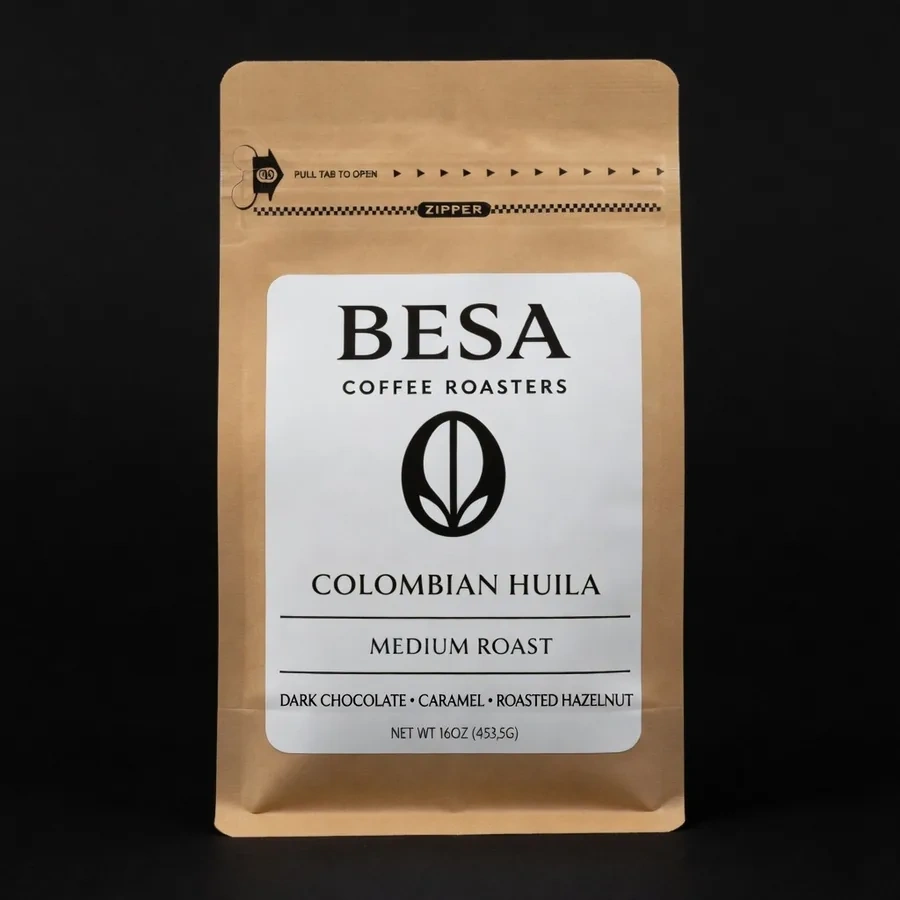
Our Colombian Huila is a single-origin medium roast with dark chocolate, caramel, and hazelnut notes: the warm, sweet cup most people picture as good coffee. Our Ethiopian Yirgacheffe is a light-medium roast with citrus, honey, and floral notes: bright and lively, proof of one species' range. If you brew pour over, start with best coffee for pour over and taste that range yourself.
Could a robusta blend beat them on caffeine or crema? On those two scores, yes. On flavor in a black cup, we will put our fresh arabica up against any shelf blend. Both bags are roasted only after you order, so the species tastes like itself.
Arabica vs robusta coffee? Questions, answered
Is arabica coffee better than robusta?
For flavor, most drinkers pick arabica. It is sweeter, more complex, and more aromatic, with more sugars and lipids than robusta. Robusta wins on caffeine, thicker espresso crema, price, and a bolder, more bitter cup. Neither is better at everything, so match the species to how you drink.
Does robusta have more caffeine than arabica?
Yes, about double. Robusta runs about 2.2 to 2.7 percent caffeine by dry weight, while arabica runs about 1.2 to 1.5 percent. That caffeine is a natural pest defense, and one reason robusta tastes more bitter.
Why is arabica coffee more expensive than robusta?
Arabica grows high, at about 2,000 to 6,500 feet, in cooler weather, is prone to coffee leaf rust, and yields less per plant. Robusta grows low, tolerates heat up to about 86 degrees, resists leaf rust, and yields more, so it costs less to farm and buy.
Why do espresso blends use robusta?
Many espresso blends add robusta, often about 10 to 30 percent, for thicker crema, more body, and extra caffeine. The arabica carries the sweetness and flavor. A 100 percent arabica shot is cleaner and sweeter, with lighter crema.
Does 100 percent arabica mean good coffee?
No. The label only names the species. It says nothing about freshness, roast, or grade. Stale arabica tastes worse than fresh, well made robusta. Look for a roast date, a named origin, and a roaster who roasts after you order.
How can you tell arabica and robusta beans apart?
Look at the bean. Arabica beans are larger and oval, with a curved, S-shaped crease. Robusta beans are smaller and rounder, with a straighter crease. In the cup the gap is clearer: arabica tastes sweeter and brighter, robusta bolder and more bitter.
Taste the arabica side, fresh.
Now you know the split: arabica for sweetness and range, robusta for caffeine, crema, and punch. Start with a fresh arabica roasted only after you order, and taste why most specialty coffee is built on this species.