
How to Store Coffee Beans: Keep Them Fresh for Weeks
You bought a fresh bag, and a week later it tastes flat. Your brew did not change. Your storage did the damage. How to store coffee beans comes down to one simple setup. Give me a few minutes. By the end, you will know the four things that ruin a bag, the five-point checklist that stops them, and the truth about the fridge and the freezer.
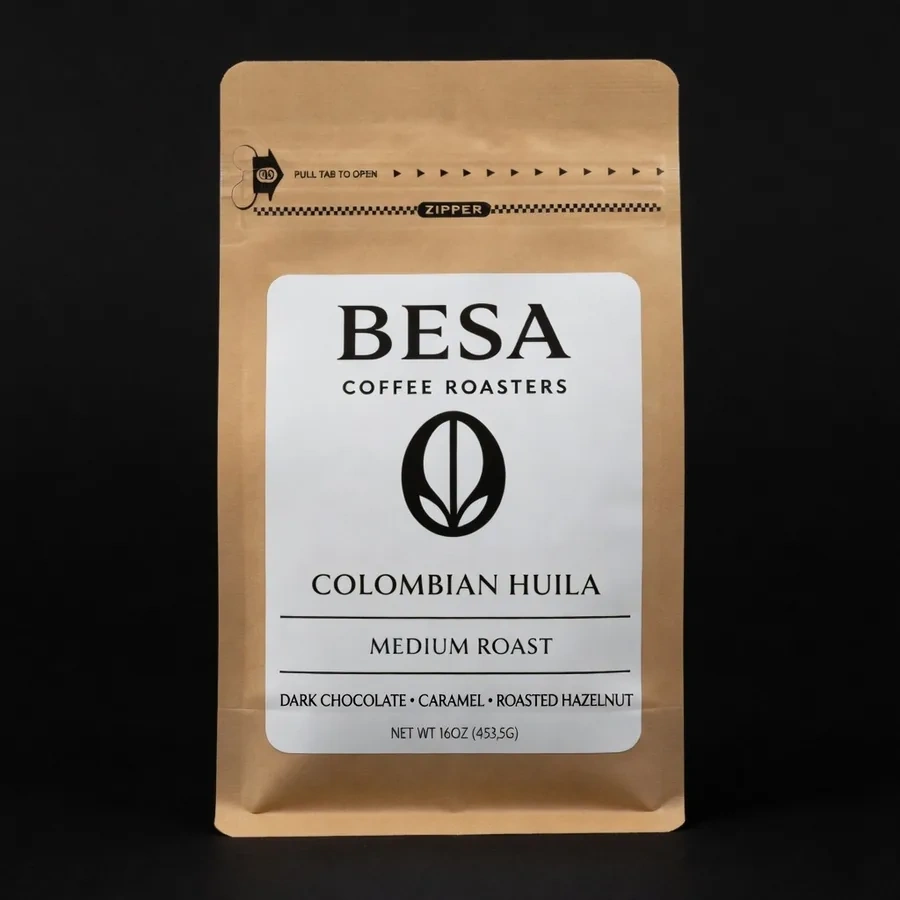
Roasted only after you order. Both of our coffees are 24 per full pound, and most roasters sell 12 oz bags. Your first order is covered by our love it or your money back guarantee.
The short answer: Keep whole beans in an airtight, opaque container at room temperature, in a dark cupboard away from heat and strong smells. Air, moisture, heat, and light are the four enemies, and air does the most damage. Stored that way, whole beans stay at their best for about 1 to 3 weeks after opening.
Why a good bag goes flat in your kitchen
Roasted coffee is a fresh food. The smells and tastes you love, like chocolate or caramel, are fragile. They start to leave the beans the moment roasting ends. You cannot stop that clock. You can only slow it down.
The National Coffee Association names four enemies: air, moisture, heat, and light. Air is the biggest one. Oxygen reacts with the oils in coffee and makes them stale, then rancid. Light speeds that breakdown up. Heat speeds up every kind of staling. Moisture dulls flavor, and coffee soaks up odors from the air around it with ease.
That is why a clear jar on a sunny counter is one of the worst homes for a good bag. It looks nice. It gives light and air a free pass, day after day. Good storage is not fancy. It just shuts those four doors.
The 5-point checklist for how to store coffee beans
Run your kitchen through these five checks. Pass all five, and a fresh bag can stay sweet for weeks, not days.
- Airtight, every time you close it. Keep beans in an airtight container, or in a good bag with a zip seal. Squeeze out the extra air before you seal it. Less air in means less oxygen at work on the oils.
- Opaque, or in the dark. Pick a solid container, not a clear one. If you only have clear glass, keep it inside a dark cupboard. Sunlight is not a display light for coffee. It is a staling light.
- Cool and at room temperature. Keep the container in a closed cupboard or pantry. Keep it away from the stove, the oven, and the top of the fridge. Keep it away from any spot above the dishwasher or your brewer, where heat and steam rise.
- Dry, and away from strong smells. Moisture is an enemy, so a damp spot is out. So is a spot next to spices or cleaning goods. Coffee absorbs odors easily, and your cup will tell on you.
- Whole bean, and only what you will use soon. Grinding multiplies the surface that meets air, so ground coffee goes stale far faster than whole beans. Grind right before you brew. And buy an amount you will finish in a few weeks. Check the roast date on the bag, not just a best-by date set months out.
The bag, the fridge, and the freezer
The bag can work, if it is a good bag. A quality bag with a one-way valve and a zip seal is fine for daily use. The valve lets carbon dioxide from fresh beans escape. Once you open the bag, the zip seal is what keeps air out, so seal it tight after each use. If your bag does not seal well, move the beans to an airtight canister with a gasket lid. A vacuum canister goes one step more. It pushes or pumps air out, so there is less oxygen left to do harm.
Skip the fridge. I get this question a lot, and the answer is almost always no. A fridge is full of moisture and food odors, and coffee absorbs both. Taking cold beans in and out also brings condensation. It does not buy you more time than a cupboard does.
The freezer is for extra beans only. If you have more than you will use in a few weeks, freezing can help, but only if you do it right. Split the beans into small, airtight portions. Take out one portion at a time. Do not put thawed beans back in. Our full guide on can you freeze coffee beans walks through each step, so you do not trade one problem for another one.
How long does stored coffee stay fresh?
Whole beans, stored airtight and opaque at room temperature, are best within about 1 to 3 weeks of opening. Ground coffee is on a much faster clock. It loses a clear amount of aroma within hours to days. That gap is the whole case for buying whole bean, which our guide to whole bean vs ground coffee lays out in full.
Not sure if your bag has crossed the line? Watch for these signs. You get little or no bloom when hot water hits the grounds. The cup tastes flat, papery, or like cardboard. The aroma is weak when you open the container. Or you catch a rancid, crayon-like smell, a sign the oils have oxidized. Run our coffee freshness test before you blame your grind or your brewer. Stale coffee will not hurt you. It just stops tasting like much.
Start fresh, then keep it fresh
Storage can only protect what you start with. A bag roasted months ago has little left to save. That is why we roast only after you order, here in Houston. Your clock starts when your bag is at its best, not when it has sat on a shelf.
Store our Colombian Huila, a medium roast with dark chocolate, caramel, and hazelnut notes, with the checklist above, and that rich, sweet cup holds. Do the same for our Ethiopian Yirgacheffe, a light-medium roast with bright citrus, sweet honey, and soft floral notes, and the bright notes stay bright to the last scoop.
Here is the loop, closed. Fresh roast in. Air, light, heat, and moisture out. Whole bean until the moment you brew. That is the whole system.
Coffee storage questions, answered
How do you store coffee beans after opening the bag?
Keep whole beans in an airtight, opaque container at room temperature, in a cupboard away from the stove and sunlight. If your bag has a good zip seal and a one-way valve, you can keep beans in the bag. Squeeze out the extra air and seal it tight after each use.
How long do coffee beans stay fresh?
Whole beans are best within about 1 to 3 weeks of opening when stored airtight and opaque at room temperature. Ground coffee fades far faster, losing noticeable aroma within hours to days. Always check the roast date on the bag, not just a best-by date.
Should you store coffee beans in the fridge?
Usually not. Coffee absorbs moisture and odors from the air around it, and a fridge has plenty of both. Taking cold beans out also invites condensation. The freezer is the better cold option, and only in small, sealed portions.
Can you freeze coffee beans for storage?
Yes, if you do it right. Divide beans into small airtight portions, take out only one portion at a time, and do not put thawed beans back in the freezer. Freezing is for extra beans you will not use in the next few weeks, not for your daily bag.
What is the best container for coffee beans?
An airtight, opaque container with a tight seal. Look for a solid, not clear, body and a gasket lid. Vacuum canisters push or pump air out and reduce oxygen further. Avoid clear glass jars unless they live inside a dark cupboard.
How can you tell if stored coffee beans have gone stale?
Look for little or no bloom when hot water hits the grounds, a flat, papery or cardboard taste, weak aroma when you open the container, or a rancid, crayon-like smell. Stale coffee is still safe to drink. It just stops tasting like much.
Your storage was not the only problem.
Now you have the system: airtight, opaque, cool, dry, and whole bean. Start with a bag roasted only after you order, and your storage finally has something worth saving.