
Ethiopian vs Colombian Coffee: What's the Difference and Which Should You Buy?
Ethiopian vs Colombian coffee. You have been buying bags hoping they taste different. They never do. These two origins taste nothing alike, and once you know which one you prefer, you will never grab the wrong bag again. Give me two minutes.
Roasted only after you order. Both of our coffees are 24 per full pound, and most roasters sell 12 oz bags. Your first order is covered by our love it or your money back guarantee.
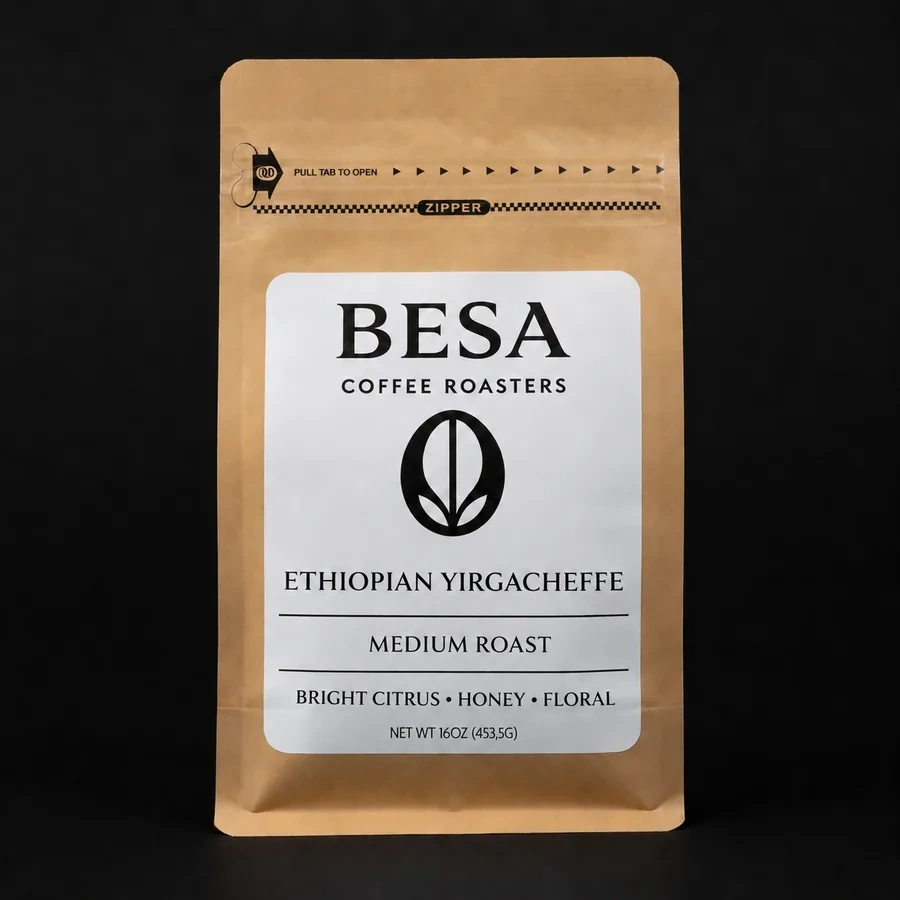
The short answer: Ethiopian coffee is bright, floral, and fruity, with a light, tea-like body. Colombian coffee is smooth, sweet, and balanced, with chocolate and caramel notes and a fuller body. Both are arabica. Buy Ethiopian, like Yirgacheffe, if you love delicate and lively cups. Buy Colombian, like Huila, if you want an easy, sweet daily drinker. If you cannot decide, taste one bag of each side by side.
Pick the wrong origin and every morning tastes like a compromise. Pick the right one and your coffee finally tastes like the description on the bag.
Ethiopian coffee is bright, floral, and fruity. You will taste lemon, jasmine, and a tea-like lightness. Colombian coffee is smooth, sweet, and balanced. You will taste chocolate and caramel with a fuller body.
One tastes like a spring garden. The other tastes like dessert. By the end of this post, you will know exactly which bag belongs in your cart.
Ethiopian vs Colombian coffee: the quick answer
| Ethiopian coffee | Colombian coffee | |
|---|---|---|
| Taste | Floral, fruity, tea-like | Sweet, chocolate, caramel |
| Body | Light to medium | Medium to full |
| Acidity | Bright and lively | Soft to bright, by region |
| Main regions | Yirgacheffe, Sidama, Guji | Huila, Nariño, Sierra Nevada |
| Varietals | Heirloom landraces | Caturra, Castillo, Typica, Bourbon |
Ethiopia: the birthplace of coffee
Ethiopia is widely considered the birthplace of coffee. Arabica still grows wild in the forests of the south west.
You can taste that history. No other country has Ethiopia's variety of coffee plants. Most are called heirloom or local landrace. Thousands of native Arabica types grow there. Many have never been formally named. This is a big reason Ethiopian coffee tastes like nothing else.
If you like bright, floral, tea-like cups, Ethiopia is your origin. Three regions to know.
Yirgacheffe is the famous one. It grows in the Gedeo zone at around 1,700 to 2,200 meters. Most of it is washed. Your cup will be delicate and floral. You will taste lemon, jasmine, and bergamot. Light body. Tea-like.
Sidama is bigger and sweeter. More berry and citrus. Balanced.
Guji is the new star. Bright and fruity. Washed or natural.
Most Ethiopian coffee grows between 1,500 and 2,200 meters. High altitude slows the cherry down. Slow ripening builds more flavor.
Colombia: the king of washed arabica
Colombia is the third largest coffee producer in the world, after Brazil and Vietnam. It is the second largest producer of arabica. Most of what it grows is washed arabica.
Colombia's regions are the states of the country. Each tastes a little different.
Huila is the specialty darling. Sweet like chocolate and caramel. Growers there win national competitions.
Nariño sits far south near the equator. Higher acidity. Intense aromas.
Sierra Nevada de Santa Marta is in the far north. Lower and hotter. Full-bodied. Chocolate and nutty. Low acidity.
The common thread is balance. If you like your coffee smooth, sweet, and full-bodied, Colombia is your origin. The main varietals are Caturra, Castillo, Typica, and Bourbon.
Which should you buy? A 30-second checklist
- You love bright, floral, fruity flavors. Your bag is Ethiopian. Start with Yirgacheffe.
- You love smooth, chocolatey, sweet flavors. Your bag is Colombian. Start with Huila.
- You brew pour over and want a delicate, complex cup. Your bag is Ethiopian Yirgacheffe.
- You want an easy-drinking daily cup everyone enjoys. Your bag is Colombian Huila.
- You still cannot decide. Buy one bag of each and taste them side by side. That is the fastest way to learn what your palate loves.
I roast both in Houston, Texas. Both are single origin. Both are roasted only after you order.
Ethiopian vs Colombian coffee questions, answered
Is Ethiopian or Colombian coffee better?
Neither is better. They are just different. Ethiopian coffee is brighter and more floral. Colombian coffee is sweeter and more balanced. Pick based on your taste, not on reputation.
What is the biggest flavor difference between Ethiopian and Colombian coffee?
Ethiopian coffee tastes floral and fruity, often with a light, tea-like body. Colombian coffee tastes sweet and smooth, often with chocolate and caramel notes and a fuller body.
Are Ethiopian and Colombian coffees both arabica?
Yes. Ethiopia is the birthplace of arabica coffee. Colombia grows washed arabica almost exclusively and is the second-largest arabica producer in the world.
What are the main coffee regions in Ethiopia?
Yirgacheffe, Sidama, Guji, Harrar, and Kaffa. Yirgacheffe is famous for delicate floral washed coffees. Sidama is sweet and balanced. Guji is bright and fruity.
What are the main coffee regions in Colombia?
Huila, Nariño, Sierra Nevada de Santa Marta, Antioquia, and Tolima. Huila is known for specialty-grade, chocolatey coffee. Nariño is known for bright aromatics. Sierra Nevada is known for full-bodied, nutty cups.
Taste both sides of the debate.
Two minutes ago you did not know which origin was yours. Now you do. I roast one of each in Houston, Texas. Try them side by side and pick your favorite.