
Is a Coffee Subscription Worth It? The Real Math for Daily Drinkers
You are paying five bucks a latte, or drinking coffee that was roasted before your last haircut. Either way, you have asked yourself: is a coffee subscription worth it? Give me three minutes. By the end you will know the exact math, the one trap that wipes out the savings, and whether your kitchen is the right place for one.
Roasted only after you order. Both of our coffees are 24 per full pound, and most roasters sell 12 oz bags. Your first order is covered by our love it or your money back guarantee.
The short answer: Yes, if you drink coffee at home every day. A subscription bag brews a cup for well under a dollar, against about 5.77 for a cafe latte, and the recurring discount beats buying bag by bag. It stops being worth it when bags arrive faster than you drink them and pile up stale.
The math: is a coffee subscription worth it for daily drinkers?
Start with your habit. The average small latte at a US coffee chain costs about 5.77. Grab one every weekday and that is roughly 127 a month, just for the basic stuff.
Now the home math. A cup brewed at home with good beans costs between 0.75 and 1.25. The cheapest grocery grind is even less, but that is a different conversation. If you buy your beans next to the cereal, read our freshness test first.
A subscription sits in the middle. Better beans than the store, brewed at home, with a recurring discount. The industry sweet spot for that discount is 10 to 15 percent off the one-time price. Ours is 13 percent.
Do the per-cup math on a subscription bag. One of our bags brews roughly 30 cups. At the subscription price, that lands at about 62 cents a cup. Compare that to the 5.77 latte. That is not a small gap. That is the whole argument, and it is honest.
But there is a trap that erases all of it. It catches almost half of would-be subscribers, and it has nothing to do with the price. Keep reading.
The freshness angle
Freshness is the second reason, and it is the one the money math hides. Coffee hits its peak in the days after roasting and fades over the weeks after. The bag on a grocery shelf may have been roasted months ago. It is still safe to drink. It just stopped tasting like much.
A subscription from a roaster who roasts after you order skips the warehouse entirely. The beans go from the roaster to your door with no shelf in between. That is the whole point of our roast-to-order model: the shortest path from roast to cup wins, every time.
When it is not worth it
A subscription is not for everyone, and I would rather you know it now than learn it from a cabinet full of stale bags. Skip it if you drink a few cups a week, not a few a day. Skip it if you travel half the month. Skip it if you go to the cafe for the ritual, not the coffee.
Nothing wrong with any of that. A subscription only pays off when it replaces a habit you already have. If the habit is not there, the subscription cannot invent it.
The trap: coffee arrives faster than you drink it
Here is the trap I promised. A subscription only saves money if every bag gets brewed. Get a bag every two weeks and drink one cup a day, and the bags pile up. Piled-up coffee goes stale. Stale coffee gets thrown out. And thrown-out coffee is the most expensive coffee there is.
Fix it with one piece of math. A pound bag gives you roughly 30 cups. Drink one cup a day and one bag covers the month. Two cups a day and you need a bag about every two weeks. Three or more and you want a bag every week.
Pick your delivery speed from your cup count, not from the default the website picked for you. Our subscriptions run weekly, every two weeks, or monthly, and you can cancel any time. Match the speed to your drinking and the math from the first section holds. Miss it, and the subscription owns you.
The 5-point checklist before you subscribe
- You drink at least a cup a day at home. No daily habit, no savings. This is the one that matters most.
- The roaster prints a roast date or roasts to order. A “best by” date is not a roast date. No roast date is a red flag.
- The discount is real: 10 percent or more off the one-time price. That is the industry sweet spot. Anything less is barely worth the commitment.
- You control the schedule. Pause, skip, and change frequency from your account. If you have to call someone, walk away.
- It is coffee you already love. A subscription locks in a flavor. Make sure it is yours. If you are not sure which of ours you are, read our Ethiopian vs Colombian guide. One is bright and floral, the other is smooth and chocolatey.
Your questions, answered
Is a coffee subscription cheaper than buying coffee?
For daily drinkers, yes. A subscription bag brews a cup for well under a dollar, while a cafe latte runs over five dollars. The 10 to 15 percent recurring discount also beats buying the same bag one at a time. The savings only hold if you brew what arrives.
How much coffee comes in each delivery?
Ours is a one-pound bag, which brews roughly 30 cups. At one cup a day, one bag covers the month. At two cups a day, you need a bag about every two weeks.
Can I pause or cancel a coffee subscription?
You should be able to. Any subscription worth your money lets you cancel easily. If it makes you call customer service to get out, walk away.
Is subscription coffee fresher than store-bought?
It can be, if the roaster roasts after you order. Coffee peaks in the days after roasting and fades over the weeks after, while store coffee may have been roasted months ago. A roast date on the bag is your proof.
How often should coffee be delivered?
Match your cup count. One cup a day means monthly delivery. Two cups a day means every two weeks. Three or more means weekly. Fresh bags beat big stockpiles.
What happens if I end up with too much coffee?
Pause the next delivery, or brew more. Coffee does not keep forever, so do not let bags stack up in the cabinet. That pile-up is the fastest way a subscription stops being worth it.
Your kitchen already does the work. Make the math work.
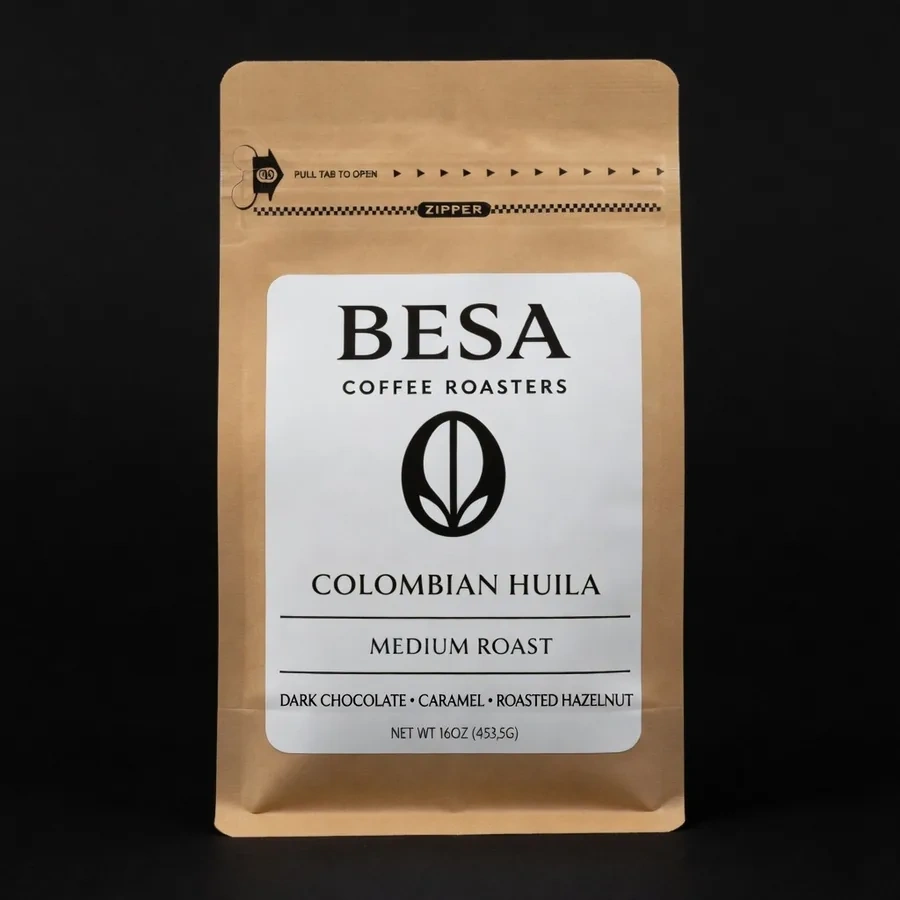
Every Besa subscription is roasted only after you order in Houston, Texas, at 13 percent off the one-time price. Try the bright, floral Ethiopian Yirgacheffe or the smooth, chocolatey Colombian Huila.