
Colombian Huila Coffee: Your Complete Guide to the Region
You have seen the word Colombian on a hundred bags of coffee. It sounds specific. It is not. Colombia is a big country with many coffee regions, and the coffee inside those bags can taste completely different from one another. So here is what the label never tells you. The word that actually matters is Huila. This region in southwestern Colombia grows close to a fifth of the country's coffee, and it is the region behind our flagship bag at Besa. Give me four minutes. By the end you will know what makes Colombian Huila coffee taste the way it does, what to look for on a bag, and how to buy it right every time.
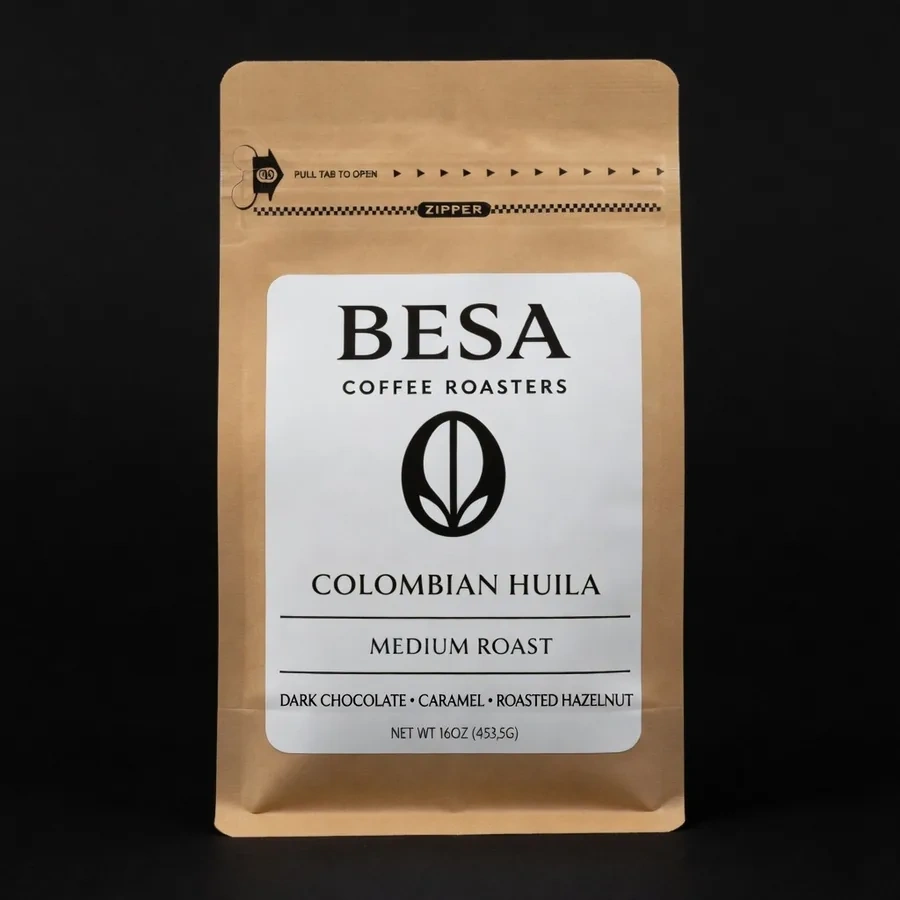
Roasted only after you order. Both of our coffees are 24 per full pound, and most roasters sell 12 oz bags. Your first order is covered by our love it or your money back guarantee.
The short answer: Colombian Huila coffee comes from a protected region in southwestern Colombia, where small family farms grow washed coffee at 1,300 to 1,900 meters in volcanic soil. The cup is sweet and balanced: caramel and milk chocolate first, then hazelnut, red apple, and a touch of citrus. Buy it as whole bean at a medium roast, and check the bag names Huila and lists a real roast date.
Where Huila sits, and why the land matters
Huila is a department in southwestern Colombia, set between the central and eastern ranges of the Andes. The Magdalena River runs through the valley between them. This is volcanic country. Some of the volcanoes are still active. Their ash, over thousands of years, built some of the richest soil on earth for growing coffee.
Coffee in Huila grows at roughly 1,300 to 1,900 meters above sea level. That height matters. The cool nights slow the cherries as they ripen, and slow ripening builds sugars. You taste that sweetness in the cup.
The farms are small. Most Huila coffee is grown by families on plots of just a few hectares, and about four out of five producers work less than three. Each family picks their cherries by hand, selecting only the ripe ones. There is no machine that can do that job well. It is slow work, and it is one of the reasons the quality stays high.
Huila also gives growers two harvests a year instead of one. That means fresher lots reach roasters more often, and you are less likely to buy a bag that has been sitting in storage for months.
What Colombian Huila coffee tastes like
If you have never had a true Huila, here is what to expect. Caramel and milk chocolate lead. Behind them you will find hazelnut, red apple, and a touch of citrus, like orange or lime. The body is medium. The acidity is gentle and balanced, never sharp. The finish is clean and sweet.
That is the classic Huila cup. Some lots lean more fruity. Some lean more nutty. But they all share that round, sweet center. Coffee experts say Huila is one region you can actually taste in the cup. Most regions are just places on a map. This one has a signature.
Two things shape that signature. First, the beans are almost always washed. The cherries are depulped, fermented, rinsed in clean water, and dried slowly on raised beds or patios. Washing gives you a clean, bright cup with nothing muddy in it. Second, the varieties are mostly Caturra, Castillo, Colombia, and Typica. These are steady, reliable Arabica plants that thrive at Huila's altitudes and produce a balanced, sweet cup.
Why the region earned a protected name
In 2013, Huila earned an official Denomination of Origin for its coffee. That is a formal recognition that the coffee's qualities come from the geography itself. The soil, the climate, the altitude, and the way local families farm. The name is protected, so it cannot be printed on coffee grown anywhere else.
The region has the trophies to back it up. Coffees from Huila consistently place among the winners in Colombia's Cup of Excellence competitions, year after year. When judges taste blind, the Huila lots keep rising to the top.
This matters for you as a buyer. When a bag says Huila, you are not buying a marketing word. You are buying a region with a track record.
The 4 point checklist for buying Colombian Huila coffee
Not every bag with a region on it is worth your money. Run through this checklist before you buy.
- The bag names the region. Look for the word Huila, not just Colombian. If a roaster will not tell you the region, they probably do not know it.
- It lists the process. You want washed. That is the process that gives Huila its clean, sweet cup.
- There is a roast date. Not a best by date, a roast date. Huila's sweetness fades with age like every coffee does. A missing roast date is a red flag. If you want the full test, read our 5 second freshness test.
- Buy whole bean at a medium roast. Medium keeps the caramel sweetness and fruit notes alive while building the chocolate body. Dark roasts mute everything that makes Huila special. And whole bean stays fresh far longer than ground, as we covered in our whole bean vs ground guide.
How to brew it at home
Huila is a forgiving coffee. Its balance means it brews well in a drip machine, a pour over, a French press, or as espresso. If you drink it black, go with a medium grind and fresh filtered water. The sweetness will come through on its own. No sugar needed.
As espresso, Huila is a quiet star. The chocolate notes hold up under pressure, and it pairs beautifully with milk. Many roasters choose Huila as the base of their espresso for exactly that reason.
Curious how it compares to our other origin? Read our Ethiopian vs Colombian coffee breakdown for the full side by side.
Colombian Huila coffee questions, answered
What does Colombian Huila coffee taste like?
Expect caramel and milk chocolate first, with hazelnut, red apple, and a touch of citrus behind them. The body is medium, the acidity is gentle and balanced, and the finish is clean and sweet. It is the classic well rounded Colombian cup.
Where is Huila, Colombia?
Huila is a department in southwestern Colombia, set between the central and eastern ranges of the Andes with the Magdalena River running through. Coffee grows there at roughly 1,300 to 1,900 meters in rich volcanic soil, mostly on small family farms.
What is the best roast for Huila coffee?
Medium. A medium roast keeps the caramel sweetness and fruit notes intact while building the chocolate body Huila is known for. Dark roasts mute the sweetness, and very light roasts can taste sharp in a coffee that is already bright. We roast our Huila medium for exactly that reason.
Is Colombian Huila coffee good for espresso?
Yes. Huila's chocolate notes and medium body hold up well under pressure, and it pairs beautifully with milk. It is a favorite of roasters who want a sweet, balanced espresso.
What does Denomination of Origin mean for coffee?
It is an official recognition that a region's coffee has qualities tied to its geography: the soil, climate, altitude, and local farming traditions. Huila earned its Denomination of Origin in 2013, which protects the name from being used on coffee grown anywhere else.
Taste the region for yourself.
Our Colombian Huila is a single origin, medium roast, roasted only after you order in Houston, Texas.