
Washed vs Natural Coffee: Which Process Should You Buy?
You buy two bags from the same country. One tastes clean and bright. The other tastes like jam. The roast is not the reason. The process is. Washed vs natural coffee is the one choice made at the farm, long before roasting, that shapes your cup most. Give me a few minutes. By the end, you will know how each process works, how each one tastes, and a five-point checklist that picks the right bag for you.
Roasted only after you order. Both of our coffees are 24 per full pound, and most roasters sell 12 oz bags. Your first order is covered by our love it or your money back guarantee.
The short answer: Buy washed if you want a clean, bright cup, and buy natural if you want a sweet, fruity one. Washed coffee has the fruit removed before drying, so you taste the bean and where it grew. Natural coffee dries inside the whole cherry for weeks, so the fruit soaks into the bean and adds body. Want something in between? That is the honey process.
It starts with a cherry, not a bean
Coffee grows as a fruit, a cherry. Inside that cherry sits the bean you brew. Around it are layers: the outer skin, the soft fruit pulp, a sticky layer called mucilage, and a thin shell called parchment. Processing is just one question. How much of that fruit stays on the bean while it dries?
That answer changes everything. The same beans, split into two lots and processed two ways, will taste like two different coffees. More fruit contact means more sweetness and more fruit flavor in the cup. Less contact means a cleaner cup, where the bean and the place it grew speak first.
Washed coffee: the fruit comes off first
In the washed process, the fruit is removed before drying. First, a machine strips off the skin and most of the pulp. The beans, still coated in that sticky mucilage, then sit in water tanks and ferment for about 12 to 72 hours. That step breaks the mucilage down. Then the beans are washed clean and dried in their parchment, down to about 10 to 12 percent moisture, over roughly 1 to 2 weeks. Last, the parchment is milled off.
Washed coffee tastes clean and bright. The acidity is clear and lively. The body is light to medium. Notes lean citrus, floral, and tea-like. Because the fruit was gone before drying, nothing covers up the bean itself. You taste the variety and the soil it grew in. That is why washed is the classic process in Colombia, and why it is common across Central America and East Africa too. It is also the thirstier method, since fermenting and rinsing take a lot of water.
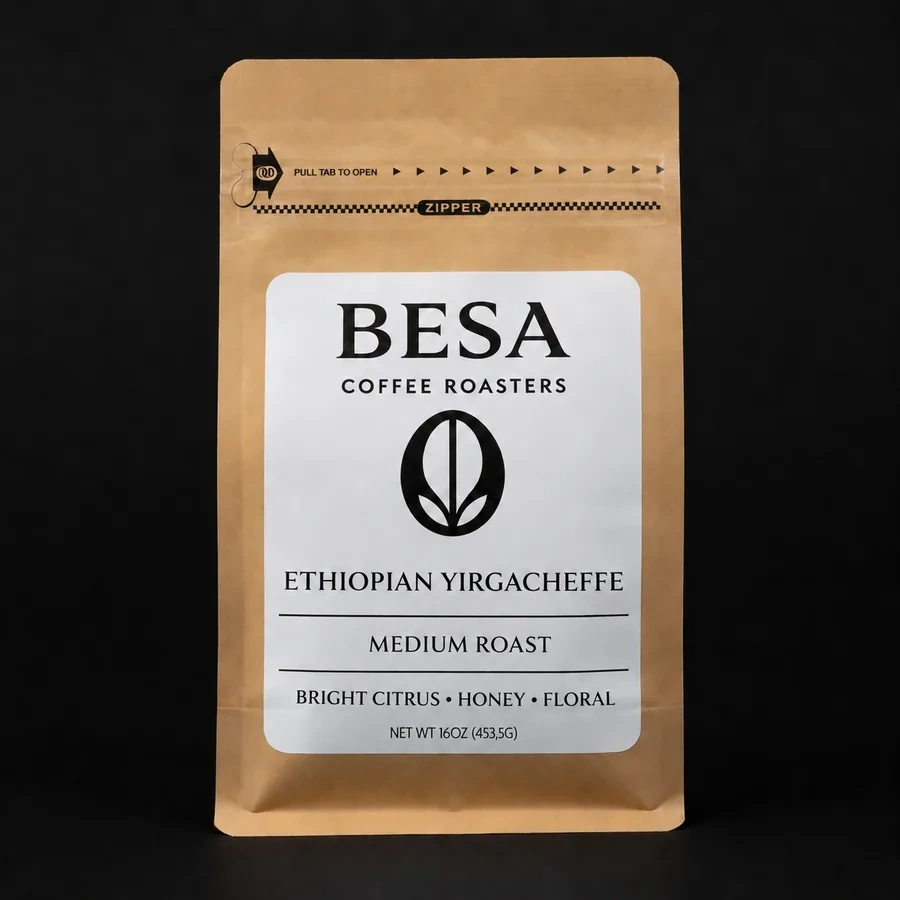
Our Ethiopian Yirgacheffe shows this side well. It is a single-origin washed coffee, light-medium roast, with bright citrus, sweet honey, and soft floral notes. Clean is not a flaw in that cup. Clean is the whole point.
Natural coffee: the fruit stays on
The natural process does the opposite. The whole cherry is laid out to dry, fruit and all, on patios or raised beds. Workers turn the cherries often so they dry evenly. That drying takes about 3 to 4 weeks. Only when the fruit is fully dry is it hulled off the bean. It is one of the oldest ways to handle coffee, and it is still common in Ethiopia, Brazil, and Yemen. It uses very little water, since there is no washing step.
For weeks, the bean sits inside sweet, slowly fermenting fruit. You taste that time. Natural coffee is fruitier and sweeter, with a fuller, syrupy body. The acidity feels rounder and softer. Notes lean berry, dried fruit, and sometimes a wine-like edge. The trade is risk. If cherries dry too slowly or unevenly, they can ferment too far or spoil, and the lot is ruined. A great natural takes patience and a careful hand.
Honey process: the middle path
One more word you will see on bags: honey. No, there is no honey in it. In the honey process, the skin is removed like a washed coffee, but some of the sticky mucilage is left on the bean while it dries. That golden, sticky layer just looks like honey. Makers grade it by color, from yellow to red to black, based on how much mucilage stays on. More mucilage means a sweeter, fuller cup, closer to a natural. Less means cleaner, closer to a washed. If washed feels too lean and natural feels too wild, honey is the bag built for you.
The 5-point checklist to pick your bag
Run your next bag through these five checks. Your answers point to one process, fast.
- You want clean and bright. Your favorite cups taste crisp, with notes you can name one by one. Buy washed. Clarity is what it does best.
- You want sweet and fruity. You love berry and jam notes and a cup that feels rich, not lean. Buy natural. The fruit is in the flavor because the fruit was on the bean.
- You want balance. Sweet, but not wild. Full, but still clean. Buy honey process. It was made to sit between the two.
- You brew for clarity. Pour over and drip show off fine, delicate notes. A washed bag shines there. You brew for body, in a press or as espresso? A natural holds up and pushes its fruit through.
- You check the bag before the origin. From now on, find the process word on every bag you buy: washed, natural, or honey. It tells you more about your first sip than the country name alone. No process listed? That is a sign the roaster is not telling you much.
Taste the washed side first
Here is my honest take as a roaster. Start with washed. It is the clearest way to learn what an origin really tastes like, because nothing is added and nothing is hidden. Our Colombian Huila is a medium roast, and Huila beans are almost always washed. That is a big part of why the cup reads clean and sweet, with dark chocolate, caramel, and hazelnut notes. Pair it with the Yirgacheffe above and you get the two faces of washed coffee: one rich, one bright.
Then go try a natural and taste the gap for yourself. That contrast will teach your palate more than any chart, including ours on single origin vs blend coffee and the head-to-head in Ethiopian vs Colombian coffee. And whatever process you pick, freshness still wins. A natural roasted months ago loses to a washed bag roasted this week, every time. We roast only after you order, here in Houston, so your clock starts at the peak.
Here is the loop, closed. Fruit off early means clean and bright. Fruit on for weeks means sweet and full. Fruit partly on means balance. Three paths, one cherry, and now you can read any bag on any shelf.
Washed vs natural coffee questions, answered
What is the difference between washed and natural coffee?
Washed coffee has the fruit removed before drying, so the bean dries clean in its parchment. Natural coffee dries inside the whole cherry for weeks, then the dried fruit is removed. That one choice drives the taste: washed cups are clean and bright, natural cups are fruitier and fuller.
What does washed coffee taste like?
Clean and bright, with clear acidity and a light to medium body. Common notes are citrus, floral, and tea-like flavors. Because the fruit is gone before drying, you taste the bean, its variety, and where it grew more clearly.
What does natural coffee taste like?
Fruitier and sweeter, with a fuller, syrupy body and softer, rounder acidity. Common notes are berry, dried fruit, and sometimes a wine-like edge. The bean spends weeks in contact with the fruit, and you can taste that contact in the cup.
Is honey process coffee made with honey?
No. No honey is added. In the honey process the skin is removed but some of the sticky mucilage is left on the bean while it dries. That sticky, golden layer looks like honey, and it gives the cup sweetness and body between a washed and a natural coffee.
Which is better, washed or natural coffee?
Neither one is better. They are different tools. Pick washed if you like a clean, bright cup where each note stands apart. Pick natural if you like a sweet, fruity cup with more body. Your taste decides, not the label.
How long does each coffee process take?
Washed beans ferment in water tanks for about 12 to 72 hours, get washed clean, then dry for about 1 to 2 weeks. Natural cherries dry whole for about 3 to 4 weeks before the dried fruit is hulled off. Natural is the slower, more hands-on path.
Start with the clean cup.
Now you can read a bag like a roaster: washed for bright and clean, natural for sweet and full. Start with a fresh washed bag, roasted only after you order, and taste what the process really does.