
How Is Decaf Coffee Made? The 4 Methods, Explained Simply
You want a cup at night, but you do not want to stare at the ceiling at 2 a.m. So you reach for decaf, then pause. How was the caffeine taken out? Give me two minutes. By the end, you will know how is decaf coffee made, the 4 methods, how much caffeine is left, and how to spot a good decaf.
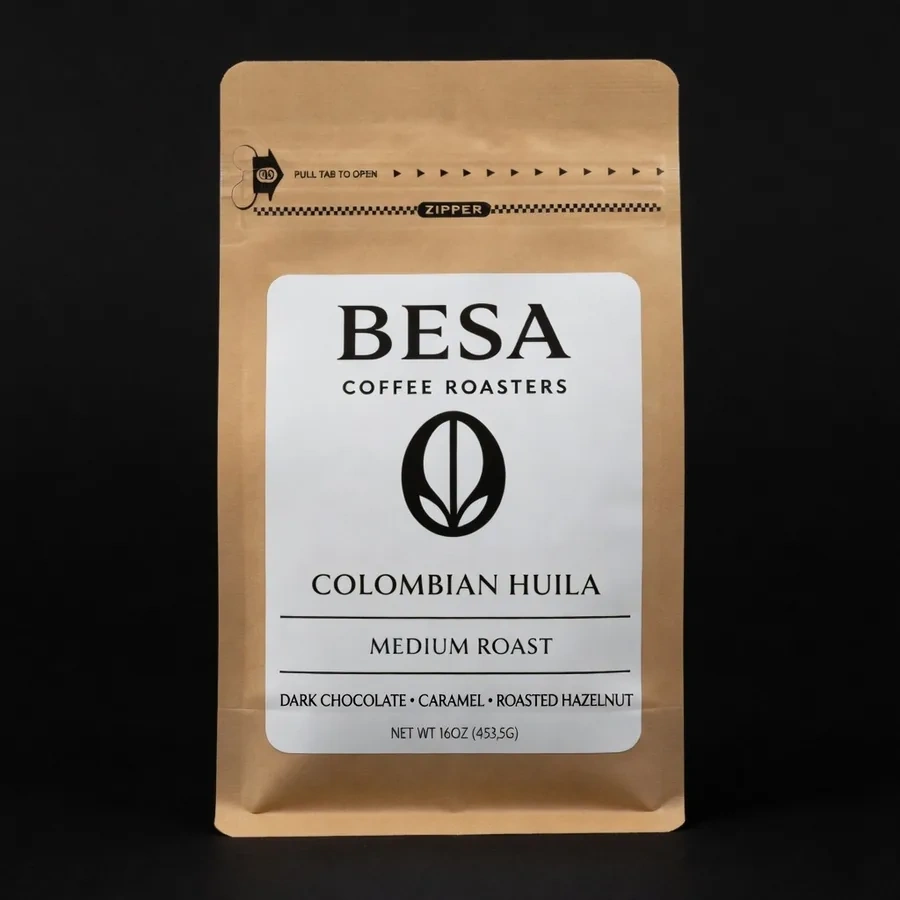
An honest note first. Besa does not sell a decaf bag today. Our two regular coffees are 24 per full pound, roasted only after you order, with our love it or your money back guarantee. This guide helps you judge any decaf bag.
The short answer: Decaf coffee is made from green, unroasted beans. They are steamed or soaked so the caffeine can move out, then one of four methods carries it away: Swiss Water, carbon dioxide, sugarcane, or a solvent. The beans are dried and roasted like any other coffee. Most methods remove 97% or more of the caffeine, but none removes it all, so a cup still holds 2 to 15 milligrams.
Decaf starts green, long before the roast
Here is the part most people miss. Decaf starts with green, unroasted beans, not a roasted bean with the buzz rinsed out.
The beans are steamed or soaked so the caffeine can move. Then water, carbon dioxide, or a solvent carries it away. The beans are dried, and only then roasted, just like any other coffee.
That order matters. Most coffee flavor is made in the roast, so taking caffeine out first lets the roaster build flavor after.
The hard part is not the caffeine. It is the flavor.
Caffeine dissolves in water. That is the good news, and the trap. Sugars, acids, and other flavor parts dissolve too, so a bad soak pulls out taste along with caffeine. Every method below solves that one problem: take the caffeine, leave the flavor. That is why one decaf tastes like real coffee, and the next tastes like warm brown water.
How is decaf coffee made: the 4 methods at a glance
| Method | What does the work | What to know |
|---|---|---|
| Swiss Water | Water and carbon filters | No added solvents, 99.9% caffeine free |
| Carbon dioxide | CO2 under high pressure | Very picky, takes caffeine and little else |
| Sugarcane | Ethyl acetate from sugarcane | Common with Colombian coffee |
| Solvent | Methylene chloride or ethyl acetate | Direct on the bean, or in the soak water only |
Most methods remove around 97% or more of the caffeine. None removes every trace, and that matters later in this guide.
Method 1: Swiss Water, the water and filter method
This method was first made in Switzerland in 1933, and sold at scale in 1980. It uses no added chemical solvents.
First, green beans soak in hot water, which pulls out caffeine and flavor. That water runs through activated charcoal filters, which trap the caffeine and let the flavor pass. What is left is Green Coffee Extract: water full of flavor, with no caffeine.
Now a fresh batch goes into that extract. It can hold no more flavor, so flavor stays in the beans. But it can hold caffeine, so only caffeine moves out. The beans end up 99.9% caffeine free. When a bag says Swiss Water, that is a clear, checkable claim.
Method 2: carbon dioxide, the high pressure method
This method was made by Kurt Zosel at the Max Planck Institute. Wet green beans go into a sealed tank, and carbon dioxide is pushed in at very high pressure, around 1,000 pounds per square inch. At that pressure, it acts like part gas and part liquid, and binds to caffeine and almost nothing else.
Then the pressure is let off, the caffeine falls out, and the clean gas is used again. This method is prized for flavor. The catch is cost: the gear is big and dear, so you see it on higher grade lots.
Method 3: sugarcane, the Colombian favorite
Sugarcane decaf uses ethyl acetate, often made by fermenting sugarcane. You will see it a lot with Colombian coffee, one more reason to know our Colombian Huila coffee guide. Ethyl acetate also shows up in ripe fruit, and as a by-product when sugars ferment.
The beans are steamed to open them up, then washed in water and ethyl acetate, again and again. It binds to the caffeine and draws it out. It boils at a low heat, around 77 degrees Celsius, so most of it leaves in drying, and any last trace burns away in the roast.
Method 4: solvent, direct and indirect
The oldest methods use a solvent such as methylene chloride or ethyl acetate, in two ways. In the direct method, steamed beans are washed with the solvent itself, which bonds to the caffeine before it is flushed out.
In the indirect method, the solvent never touches the beans. Beans soak in hot water, and caffeine and flavor move into that water. The beans come out, the solvent takes the caffeine from the water alone, and that same flavor-rich water goes back to the beans.
Is that safe? The National Coffee Association notes that all decaf methods are authorized as safe by regulators in the United States, Europe, and other places. In the United States, methylene chloride left in roasted decaf may not pass 10 parts per million.
Is decaf caffeine free? No, and the FDA says so plain
Decaf means far less caffeine, not none. The Food and Drug Administration says decaf has about 2 to 15 milligrams in an 8 ounce cup. Small, but a few large cups can add up. For scale, the FDA cites 400 milligrams a day as an amount not linked to bad effects for most adults. If you react strongly to caffeine, the FDA says you may want to skip decaf too.
Why old decaf tasted flat, and why new decaf can taste right
For years, decaf got the leftovers: weak beans, little care, and a thin, sad cup. That has changed. Better beans go into decaf now, and the methods above guard flavor far better. But fresh still wins: a great method cannot save a stale roast. Check the roast date, not a vague best by date. Our coffee freshness test helps any bag stay at its best.
The 5-point decaf buying checklist
Use this the next time you stand in front of a decaf bag.
- Find the method on the bag. Swiss Water, carbon dioxide, sugarcane, or a named solvent method.
- Check the roast date. A roast date close to when you buy. Fresh beats stale, every time.
- Pick a real origin. Good decaf is single origin, with tasting notes, like regular coffee.
- Count the trace caffeine. Plan on 2 to 15 milligrams per 8 ounce cup. Treat decaf as low caffeine, not no caffeine.
- Brew it like you mean it. Weigh your dose and grind just before you brew. Our coffee to water ratio chart gives you the dose.
What about your morning cup?
I roast regular coffee, so let me be straight. If you need a night cup, buy a good decaf using the checklist above. For your morning cup, freshness is the whole game. Our Colombian Huila is a single origin, medium roast with dark chocolate, caramel, and hazelnut notes. Our Ethiopian Yirgacheffe is a single origin, light-medium roast with citrus, honey, and floral notes. Both are roasted only after you order, so your bag is days old, not months old.
Decaf questions, answered
How is decaf coffee made?
From green, unroasted beans. They are steamed or soaked, then water, carbon dioxide, or a solvent carries the caffeine away. The beans are dried and roasted like any other coffee. Most methods remove around 97% or more of the caffeine.
Is decaf coffee 100% caffeine free?
No. The FDA says decaf typically has 2 to 15 milligrams of caffeine in an 8-fluid-ounce cup. If you react strongly to caffeine, the FDA says you may want to avoid decaf drinks altogether.
What is Swiss Water decaf?
A water method with no added chemical solvents. Beans soak in Green Coffee Extract, water full of flavor but no caffeine, so only caffeine moves out. Carbon filters trap it. The beans end up 99.9% caffeine free.
What is sugarcane decaf?
It uses ethyl acetate made by fermenting sugarcane, common with Colombian coffee. Steamed beans are washed in it so it binds to caffeine, then steamed again to clear what is left.
Are the solvents used to make decaf safe?
The National Coffee Association notes that all decaf methods are authorized as safe by food safety regulators in the United States, Europe, and other countries. In the United States, methylene chloride residue in roasted decaf may not exceed 10 parts per million.
Why does some decaf taste flat?
Caffeine dissolves in water, but so do sugars, acids, and other flavor compounds. A harsh process, old beans, or a stale roast can lose too much flavor. Fresh, well handled decaf tastes much closer to regular coffee.
Start your day with a fresh roast.
You now know how decaf is made, and how to judge any bag by method, origin, and roast date. Put that same test on your morning coffee, roasted only after you order.